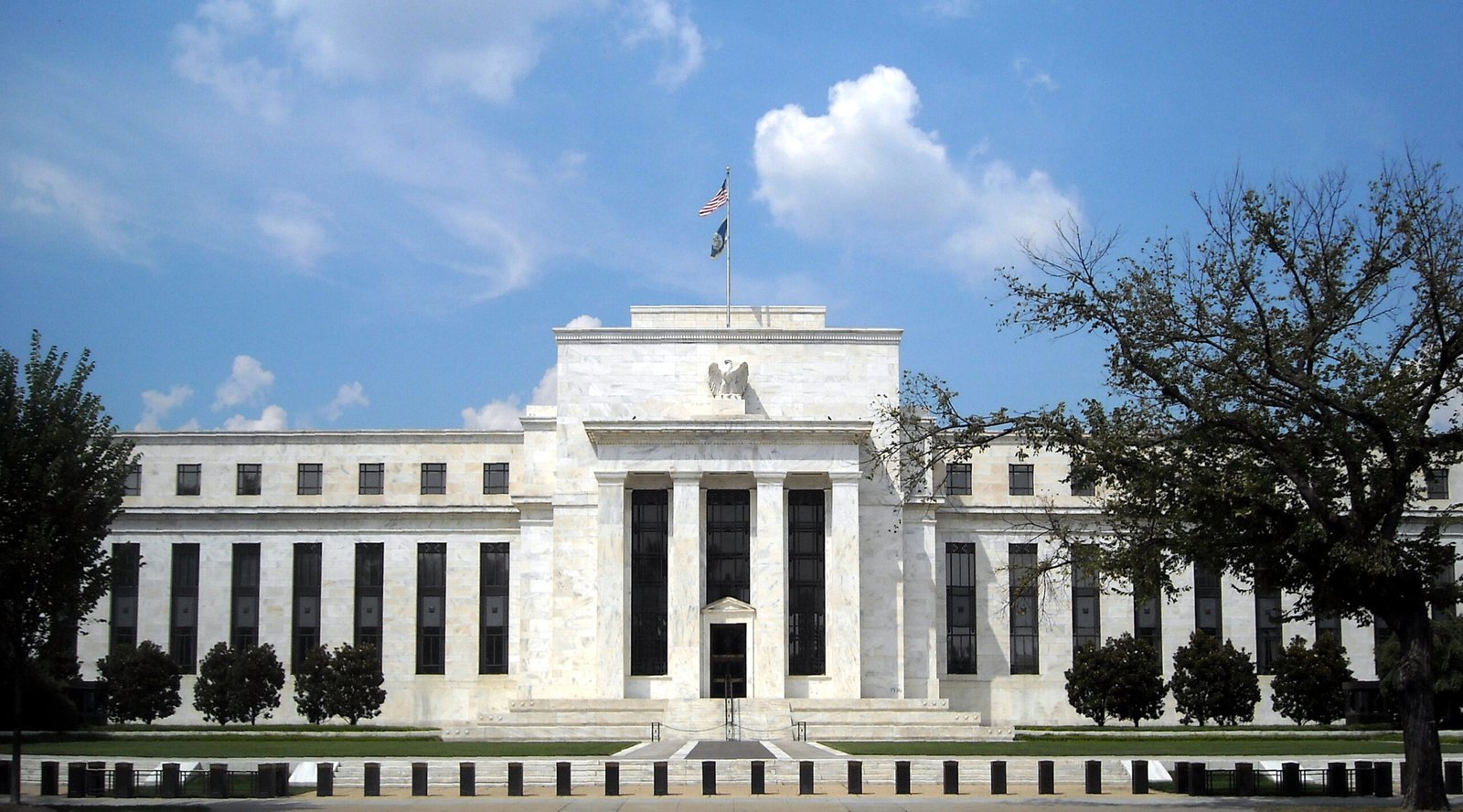
The Federal Reserve’s rate-setting committee concludes a two-day meeting today, Wednesday, 28 October 2026, and will announce its decision at 2:00 p.m. Eastern Time. CONFIRMED: the meeting is the Federal Open Market Committee (FOMC) meeting of 27–28 October listed on the Federal Reserve’s own meeting calendar, and the current target range for the federal funds rate, set on 16 September 2026, is 3.75% to 4.00%. REPORTED, NOT DECIDED: markets overwhelmingly expect the committee to leave that range unchanged today — a pause — with the CME FedWatch tool implying about a 91% probability of no change, as reported by Reuters on 28 October. That expectation is not the decision, and the committee could still surprise.
This explainer sets out where rates stand, why a pause is expected after a hike only six weeks ago, what data the committee is weighing, and what the statement and the press conference with Chair Kevin Warsh may signal about December. It gives no personal financial advice. Interest-rate decisions affect borrowing and saving in complex ways that depend on individual circumstances, and readers should not make a financial decision on the basis of a single explainer.
Where rates stand: the September hike
At its 15–16 September 2026 meeting, the FOMC raised the target range for the federal funds rate by a quarter of a percentage point (25 basis points), to 3.75% to 4.00%. The vote was unanimous, 12–0. It was the first rate increase since 2023, according to summaries of the decision, ending a long period in which the range had been held steady — at 3.50% to 3.75% through the January, March, April, June and July 2026 meetings.
The September statement said economic activity was “expanding at a solid pace,” domestic spending had been resilient, and “inflation remains elevated,” adding that the move would support a timelier return to the committee’s 2% inflation goal. The minutes of the September meeting, released on 7 October, recorded that most participants assessed that another increase would likely be appropriate by the end of the year, while emphasising that each decision would depend on incoming data.
The September meeting also produced updated economic projections. Sixteen of 18 participants projected at least one additional increase in 2026, and four saw room for two more, according to the Wells Fargo summary. Those projections are individual participants’ assessments, not a committee commitment. The October meeting is not one of the meetings paired with a new Summary of Economic Projections, so no new “dot plot” is expected today. The next scheduled FOMC meeting is 8–9 December 2026, and the minutes of the October meeting are scheduled for release on 18 November.
Why a pause is expected today
Three reasons are most often given in pre-decision coverage for expecting a hold.
First, timing. Six weeks is a short interval between moves for a committee that has said it wants to see how its last move affects the economy. A pause would let officials observe more data — including the third-quarter GDP estimate and September PCE inflation report due on 29 October — before deciding whether a further increase is needed in December.
Second, communication. The Federal Reserve’s communications blackout began on 17 October and runs through 29 October, during which officials do not publicly guide markets. Before the blackout, officials’ final public comments were widely read as suggesting patience, according to market coverage. The Fed generally prefers not to surprise markets with a rate decision, although a surprise is never impossible. Traders’ confidence in a hold rose sharply during October — from about 29% a month before the meeting to almost 91% heading into the final weekend, as reported in coverage of FedWatch pricing.
Third, the balance of the data. Inflation remains above target, which argues against easing, but the labour market has cooled, which argues against rushing a further increase. A pause holds the stance put in place in September while the committee gathers more evidence. That is why the statement’s language about December will matter more than today’s decision itself, if the decision is a hold as expected.
Market pricing should not be mistaken for a forecast by the Fed. The CME FedWatch tool derives probabilities from prices in the market for 30-day federal funds futures. It measures what traders, in aggregate, are willing to bet on — not what the committee will do. The figure moved during the week: Reuters reported an implied 91% probability of a hold on 28 October, while other outlets on 27 October quoted 90.6% from the same tool. A Reuters survey cited in preview coverage found 94 of 100 economists expected no change.
The data the committee is weighing
Inflation: still above the 2% target
Inflation is the main reason the Fed raised rates in September, and it remains the main reason a further increase is on the table for December. Consumer price inflation over the 12 months to September 2026 was 3.7%, according to the Bureau of Labor Statistics figures cited in pre-decision coverage, up from 3.4% in each of the previous two months and above market expectations of 3.6%. The energy index was reported to have risen 20.4% over the same 12 months. Higher energy costs have been linked in coverage to elevated oil prices, geopolitical developments and tariffs — factors the September minutes were reported to have cited, alongside the artificial-intelligence infrastructure build-out.
The Fed’s formal target is 2% inflation, measured by the PCE price index, the committee’s preferred gauge. The September PCE report, due on 29 October, will therefore be watched closely, but the committee will have to vote today without it. That timing quirk — deciding a day before two major data releases — is itself a reason for caution that several previews highlighted. Longer-term inflation expectations were reported in the September minutes summaries to have remained stable, while some evidence suggested short-term expectations were rising.
Readers should be careful with the inflation figures quoted in fast-moving coverage. Different measures (consumer prices, producer prices, PCE) tell different stories. This article reports the consumer-price figure as cited in pre-decision coverage and attributes it accordingly; the official release should be checked before any figure is quoted as a Bureau of Labor Statistics finding in its own right.
Jobs: cooling, but not collapsing
The labour market has cooled from its earlier strength, but coverage of the September minutes described it as stable and close to maximum employment, with risks broadly balanced. Previews cited September payroll growth of 29,000 jobs, against expectations of about 84,000, and an unemployment rate ticking up to 4.2%. Those figures are as reported in preview coverage, not as verified here against the official release. The picture they paint — described in one preview as a “low-fire, low-hire” market — is one in which employers are neither hiring strongly nor laying off in large numbers.
That matters because the Fed has a dual mandate: maximum employment and stable prices. When inflation is too high and hiring is weakening, the committee faces a trade-off: higher rates help bring inflation down but can weaken hiring further; holding rates steady avoids adding pressure to the jobs market but risks letting inflation persist.
Growth: solid overall, uneven underneath
The September statement described activity as expanding at a solid pace, led by business investment, with resilient consumer spending. Previews reported second-quarter GDP growth revised up to 2.2% and third-quarter growth projected in a wide range, driven in large part by investment in data centres and semiconductors. At the same time, consumer confidence was reported to have fallen to a 12-year low. The contrast — strong investment-led growth alongside weak household sentiment — is part of why the committee’s judgment is genuinely difficult.
The energy backdrop connects directly to household budgets: see fuel prices, the national polling context and the midterm election campaign.
What to watch at 2:00 p.m. and 2:30 p.m.
The decision statement is scheduled for 2:00 p.m. ET. It is usually short — the September statement was notably brief — and small changes in wording are treated as significant. The press conference with Chair Warsh follows at 2:30 p.m. ET. Four things deserve attention, in order of importance if the decision is a hold:
1. The December signal. The most important question is whether the statement or the chair keeps a December increase on the table. Markets priced a December hike as more likely than not before today’s meeting — around 73% to 75% in the readings quoted in previews. Language such as “further increases may be appropriate” would keep December live; language emphasising patience would push expectations the other way.
2. The vote. A unanimous vote, as in September, would signal broad agreement. A dissent — in either direction — would signal disagreement about the path and would be read as information about December. No vote is known before the announcement.
3. The inflation language. Watch for any change in how the statement describes inflation and its risks. Stronger language about persistent inflation would point towards December. Also watch for any mention of tariffs, energy prices or the AI investment boom, the drivers cited in the September minutes.
4. The jobs language. Watch for any change in how the statement describes the labour market. A shift towards language about softening or downside risks would be read as making a December hike less likely.
What each outcome would mean in general terms
| Outcome | What it would mean | What it would signal |
|---|---|---|
| Hold at 3.75%–4.00% (expected) | The September stance is maintained; borrowing costs set by markets may still move on the statement’s language. | The committee wants more data before moving again; December stays live. |
| Hike of 25 basis points to 4.00%–4.25% | A second increase in six weeks; a stronger signal that inflation is the dominant concern. | The committee judges inflation risks to outweigh jobs risks now. |
| Cut (least expected) | A reversal of the September move, six weeks after it was made. | The committee judges jobs or growth risks to have become dominant. No pre-decision coverage expected this outcome. |
A change in the federal funds target range does not directly set mortgage rates, credit-card rates or savings rates. It guides the overnight market in which banks lend reserves to each other, and influences broader financial conditions through expectations and bond yields. Consumer and business rates can move before a meeting, on expectations, and after it, on the statement’s language.
What happens next
After today, the September PCE inflation report and the first estimate of third-quarter GDP are both due on 29 October. The minutes of today’s meeting are scheduled for 18 November. The next FOMC meeting is 8–9 December, when new economic projections will be published.
This page will be updated on the same URL after the 2:00 p.m. ET announcement with the decision, the vote and the key language from the statement and press conference.
Frequently asked questions
When is the Federal Reserve’s October 2026 rate decision?
Wednesday, 28 October 2026. The FOMC meeting runs 27–28 October, the statement is scheduled for 2:00 p.m. ET on 28 October, and Chair Kevin Warsh’s press conference follows at 2:30 p.m. ET, according to the Federal Reserve’s October calendar.
What is the current federal funds rate?
The target range is 3.75% to 4.00%, set by a unanimous 12–0 vote on 16 September 2026. That was the first increase since 2023.
What is expected at the October meeting?
A pause — no change — was overwhelmingly expected before the announcement, with the CME FedWatch tool implying about a 91% probability of a hold, as reported by Reuters.
Why did the Fed raise rates in September?
The September statement said inflation “remains elevated” relative to the committee’s 2% goal and that the increase would support a timelier return to that goal, when activity was expanding at a solid pace and the labour market had changed little.
Updated: 28 October 2026. This is a decision-day explainer written before the announcement. It will be updated on the same URL after the 2:00 p.m. ET statement. For the official decision, see federalreserve.gov.