
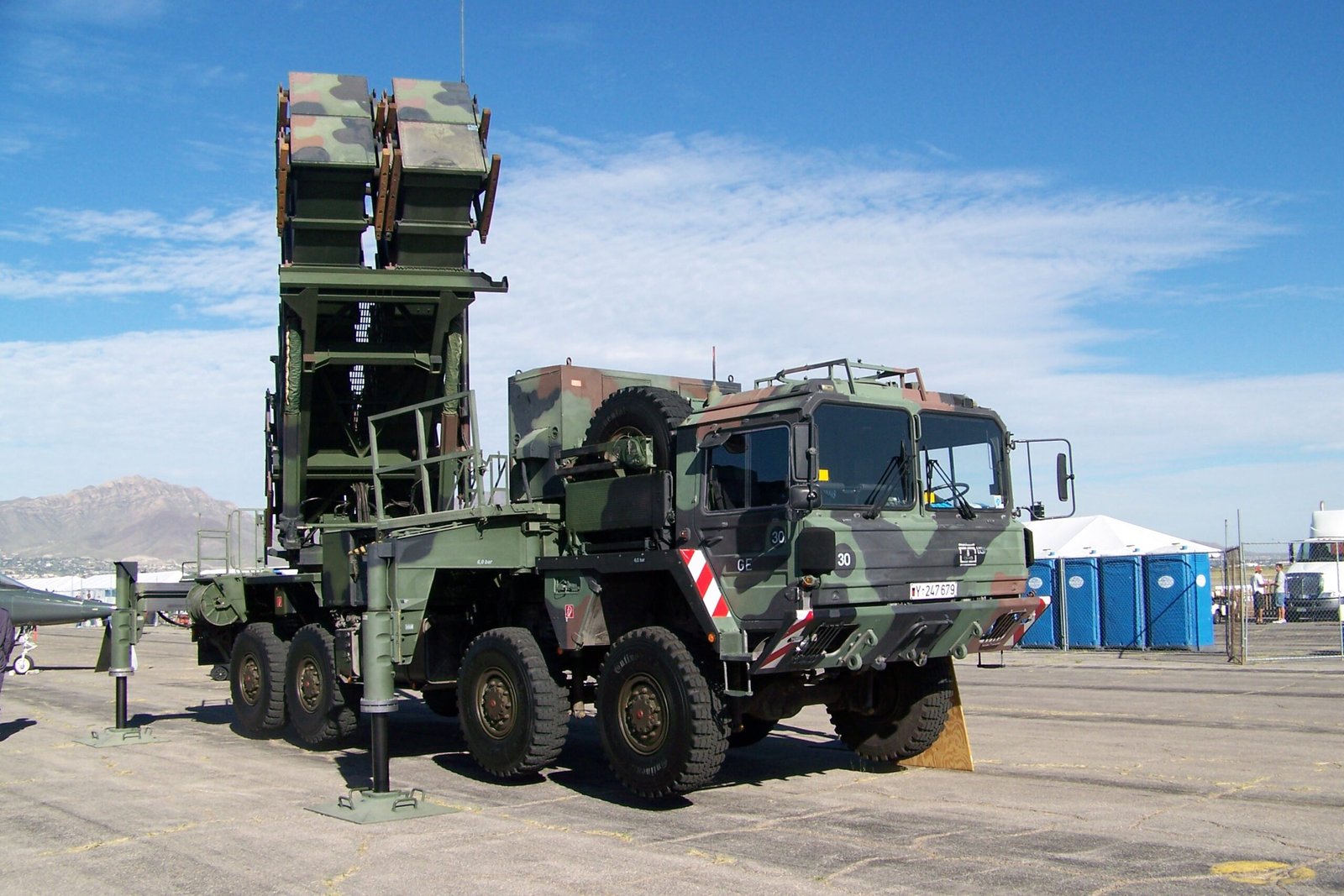
Confirmed: Ukraine’s president says his country has been waiting nearly a month for the United States defence secretary to sign off on missiles for its Patriot and NASAMS air-defence systems, and the U.S. secretary of state says a batch of interceptors may not have been delivered but that this was not for political reasons. Reported, and not established as fact: why the missiles have not moved, how many interceptors are held up, and whether the delay is connected to wider U.S.–Ukraine tensions over Russian refinery strikes and an announced “energy ceasefire.” This article separates the confirmed statements from the reported claims, attributes every claim about the delay, and does not speculate on the reason for it.
The stakes are stated by both sides in the same terms: winter, and Russian attacks on energy and civilian infrastructure. President Volodymyr Zelenskyy has repeatedly called on the United States, which supplies missiles purchased by NATO allies under a programme known as PURL, to speed up deliveries ahead of winter, Reuters reported on 26 October 2026. The missiles are not, in Zelenskyy’s and Reuters’ account, new weapons Ukraine is asking the United States to give. They are missiles Ukraine’s allies have already paid for, awaiting an American authorisation to move. That distinction — paid for, but not yet signed off — is the whole story. For the wider context, see the energy-ceasefire explainer.
What Zelenskyy said on 26 October
On Monday 26 October 2026, Zelenskyy said Ukraine had been waiting for almost a month for the U.S. defence secretary to sign off on critical missile supplies, as Russia stepped up attacks on energy and civilian infrastructure, Reuters reported from Kyiv. The report, by Yuliia Dysa, quotes Zelenskyy’s post on X directly: “In particular, we have been waiting for nearly a month for Mr Hegseth to sign off on missiles for Patriots and NASAMS. I instructed our team to raise this with the American side once again.”
Zelenskyy returned to the point on 27 October in a closed-door press briefing reported in summaries of his remarks. He said Ukraine receives an average of 12 Patriot interceptor missiles per month from the United States throughout 2026, needs to intercept around 150 Russian ballistic missiles per month, but receives about 150 Patriot missiles from the United States annually. He said some European countries had agreed to provide additional missiles from their stockpiles, but transfers require Washington’s approval, and pointed to documents awaiting Hegseth: “We want the Americans to start signing off on the supply of antiballistic missiles – interceptor missiles – to Ukraine from the countries we’ve reached agreements with. Because without Hegseth’s signature, it’s simply impossible,” he said, according to the summary. Those figures are Zelenskyy’s stated figures. No independent confirmation was found in the sources checked, and they are presented only with that attribution. This article gives no number for the held-up batch, because none was confirmed.
What Rubio said: “not for political reasons”
The U.S. response came a week earlier, on 20 October 2026, from Secretary of State Marco Rubio in Mumbai. Rubio acknowledged that a batch of interceptors purchased for Ukraine under PURL “may not have been delivered,” Reuters reported, “but that this was not because of any political intent.” His words, as reported, were: “I think the important takeaway is that there has not been some deliberate political directive to go out and harm Ukraine.” He added: “There’s nothing being deliberately denied to Ukraine.”
Rubio said he had held a 45-minute conversation with Zelenskyy that day. According to Zelenskyy, the topics included ballistic-missile interceptors, early warning of Russian attacks, and Starlink and Starshield satellite services, which Zelenskyy said needed to be restored. Reuters noted the comments came after it had earlier reported that Hegseth had yet to authorise delivery of the latest package of U.S. weaponry purchased by NATO allies under PURL.
What PURL is — and why allies pay but America signs
PURL stands for the Prioritised Ukraine Requirements List (the spelling “Prioritized” is also used, including by Ukraine’s Defence Ministry). It is the mechanism through which NATO allies fund purchases of U.S.-manufactured weapons for Ukraine.
Ukraine’s Ministry of Defence describes the steps. Ukraine defines the critically important weapons it requires, including air-defence systems and artillery ammunition. Ukraine, NATO and the United States jointly approve the prioritised monthly requirements. NATO member states, excluding the United States, provide the financial contributions for the specified priority U.S.-manufactured weapons. Once funding is secured, the United States delivers the weapons to Ukraine. The ministry describes each month’s requirement as approximately $1 billion, comprising two $500 million packages, and stresses the mechanism is designed for weapons that cannot readily be substituted by European alternatives — which is why American authorisation matters even when the money is European.
| Step | Who acts | What happens |
|---|---|---|
| 1. Requirements | Ukraine | Kyiv lists its most urgent needs, led by air defence |
| 2. Joint approval | Ukraine, NATO, United States | The prioritised monthly list is agreed |
| 3. Funding | NATO allies and partners (not the U.S.) | Allies contribute to packages of about $500 million each |
| 4. Delivery | United States | U.S.-made weapons are supplied; transfer needs U.S. authorisation |
Patriot vs NASAMS: two layers, not the same thing
Patriot and NASAMS are complementary layers, designed for different threats. Neither replaces the other.
Patriot — the MIM-104 Patriot, made by Raytheon with Lockheed Martin and Boeing involvement — is the top tier of Ukraine’s air-defence network in reporting of the delay, and its most reliable defence against Russian ballistic missiles, which are fast, arrive with little warning, and are particularly difficult to intercept. The interceptor most associated with that mission is the PAC-3 family, including the PAC-3 MSE. Patriot can also engage cruise missiles, drones and aircraft, but its distinctive role is the ballistic-missile layer no other system Ukraine operates can provide at the same level.
| System | Main role in Ukraine | Built for | Limit |
|---|---|---|---|
| Patriot (PAC-3) | Top tier; ballistic-missile defence | Ballistic missiles, plus cruise missiles, drones, aircraft | Scarce, expensive interceptors |
| NASAMS | Medium-range layer | Cruise missiles, drones, aircraft | Not designed for ballistic intercepts |
Winter, energy strikes, and the wider tensions
Zelenskyy’s call to speed deliveries “ahead of winter” follows the pattern of previous winter campaigns: Russian forces striking power generation, transmission and heating as demand rises. On 14 October 2026, after President Trump had announced what he described as an energy ceasefire, Russian forces struck Ukrainian energy sites for a third straight night, the Associated Press reported. Zelenskyy said the assault left at least 600,000 people without power in the Kyiv and Kharkiv regions and caused significant damage to equipment at 26 power-system facilities and four oil-and-gas facilities. Kremlin spokesman Dmitry Peskov said details of the ceasefire were still being decided. The episode is covered in full in the energy-ceasefire explainer linked above. This article asserts no cumulative count of energy sites struck: the “170+ energy sites” figure in the keyword brief was not verified in any source checked and is not used.
What would change the story
Three developments would change this story, and the publish second pass should check for all three: a Pentagon announcement or Ukrainian confirmation that the sign-off has been given and the batch is moving; a delivery announcement confirming missiles have arrived; or a fuller U.S. explanation of the hold-up from the Pentagon or State Department, giving a reason that can be reported as an official explanation rather than inferred. As of 30 October 2026, none had happened: Zelenskyy renewed his appeal on 29 October, saying Ukraine was “awaiting the decisions” on Patriot interceptors, and reporting on 30 October still described Ukraine as waiting for Hegseth’s approval.
Frequently asked questions
What is PURL?
PURL is the Prioritised (or Prioritized) Ukraine Requirements List: a NATO-managed mechanism under which allies and partners fund purchases of U.S.-manufactured weapons for Ukraine. Ukraine sets the priority list with NATO and the United States, allies pay for packages of about $500 million each, and the United States delivers the weapons. The United States does not fund PURL itself.
Why does Ukraine need U.S. sign-off if allies have already paid?
Because the missiles are American in origin. Their transfer to Ukraine requires U.S. authorisation, even when allies funded the purchase or hold the missiles. President Zelenskyy says that without Defence Secretary Hegseth’s signature, the supply he describes is “simply impossible.”
What is the difference between Patriot and NASAMS?
Patriot is the top tier of Ukraine’s air defence and its most reliable defence against ballistic missiles. NASAMS is a medium-range system built to counter cruise missiles, drones and aircraft, using AMRAAM missiles. NASAMS is not designed for ballistic-missile intercepts, so the two systems complement each other rather than replacing each other.
Has the United States explained why the missiles are delayed?
No single official reason was given in the reporting checked. Secretary of State Marco Rubio said on 20 October 2026 that a batch of interceptors may not have been delivered but that there was no deliberate political directive and nothing was being deliberately denied. President Zelenskyy says Ukraine has waited nearly a month for the sign-off. The reason for the delay has not been established in public reporting checked for this draft.
Updated: 30 October 2026. The sign-off and delivery position is as reported on 26–29 October 2026: Zelenskyy renewed his appeal on 29 October and Ukraine was still awaiting the decisions as of 30 October. No reason for the delay is asserted in this article.
SOURCES
- Reuters (Yuliia Dysa), “Ukraine has waited nearly a month for US to sign off on Patriot missiles, Zelenskiy says”, 26 October 2026, via 93-5 The Lloyd — https://935thelloyd.com/2026/10/26/ukraine-has-waited-nearly-a-month-for-us-to-sign-off-on-patriot-missiles-zelenskiy-says/
- Reuters (Gram Slattery), “Rubio says Ukraine interceptors may not have been delivered, but not for political reasons”, 20 October 2026, via 93-5 The Lloyd — https://935thelloyd.com/2026/10/20/rubio-says-ukraine-interceptors-may-not-have-been-delivered-but-not-for-political-reasons/
- Ukraine Ministry of Defence, “How NATO, European partners, and the United States are strengthening Ukraine through the PURL initiative” — https://mod.gov.ua/en/news/how-nato-european-partners-and-the-united-states-are-strengthening-ukraine-through-the-purl-initiative
- Business Insider via EuropeSays, “Ukraine’s been waiting almost a month for Hegseth to sign off on Patriot missiles, Zelenskyy says”, October 2026 — https://www.europesays.com/ukraine/60943/
- EuropeSays, “Ukraine receives 12 Patriot missiles per month from US, Zelensky says”, October 2026 (Zelenskyy’s stated figures; no independent confirmation found) — https://www.europesays.com/ukraine/61919/
- Associated Press via Military.com, “Zelenskyy Says Russia Keeps Striking Ukraine’s Energy Sites Despite Trump Ceasefire Push”, 14 October 2026 — https://www.military.com/zelenskyy-says-russia-keeps-striking-ukraines-energy-sites-despite-trump-ceasefire-push
Related coverage: New Russia–Ukraine Peace Talks Explained: What Abu Dhabi Could (and Couldn’t) Settle.