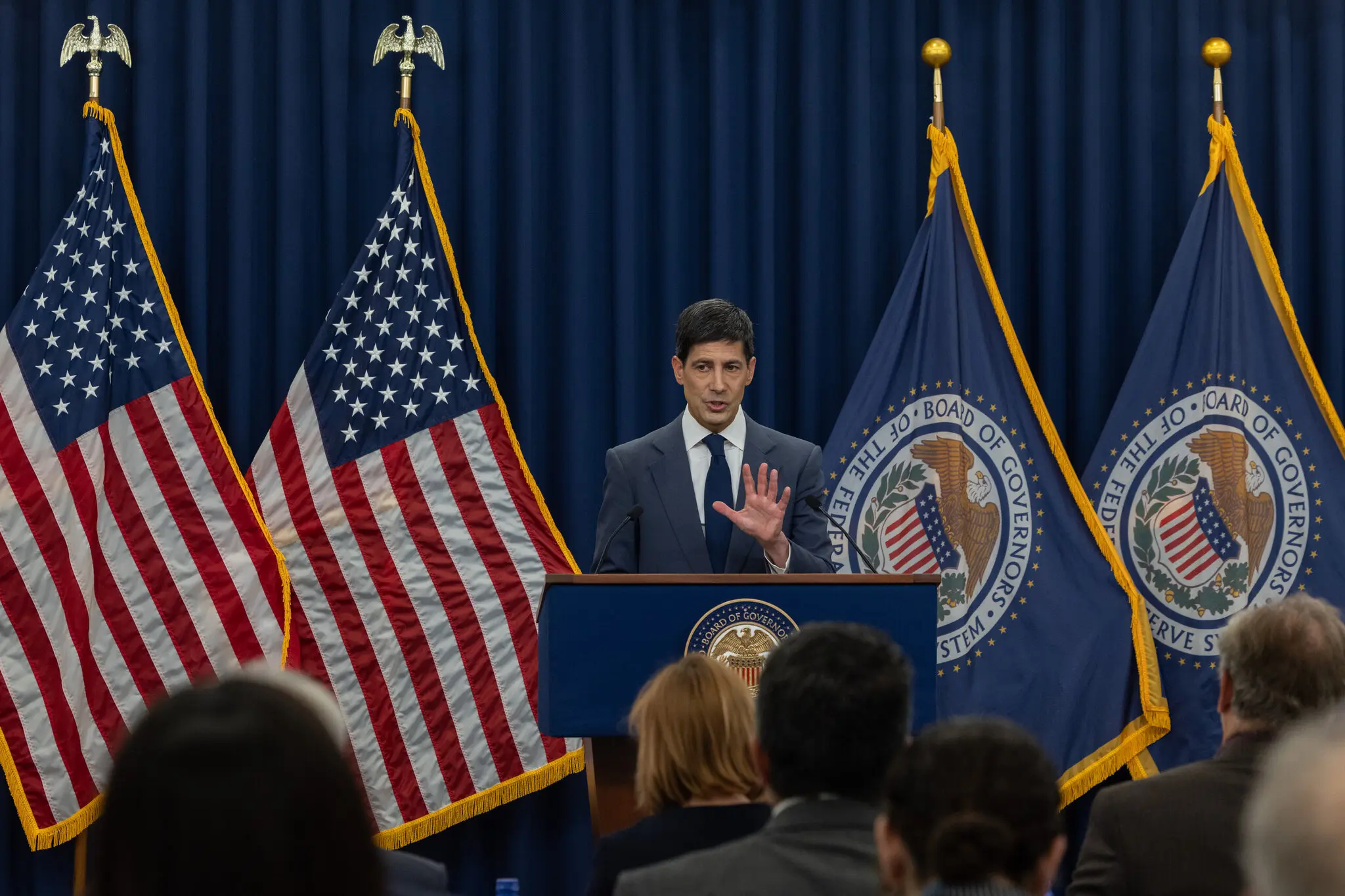
Federal Reserve Chair Kevin Warsh held his first press conference following his inaugural policy meeting, outlining a new approach to monetary policy while announcing that the Federal Reserve would keep interest rates unchanged. The event marked the beginning of a new chapter for the U.S. central bank, with Warsh emphasising inflation control, institutional reform, and a more restrained communication strategy.
Federal Reserve Holds Interest Rates Steady
At its June policy meeting, the Federal Open Market Committee (FOMC) voted unanimously to maintain the federal funds rate at 3.50% to 3.75%.
Officials cited:
- Persistent inflation remaining above the Fed’s 2% target.
- A resilient labour market.
- Continued economic growth despite global uncertainty.
- Elevated energy prices linked to geopolitical tensions.
Although rates were left unchanged, updated projections indicated that several policymakers now expect at least one interest rate increase later in 2026 if inflation remains elevated.
Warsh Promises Broad Federal Reserve Reforms
During his first appearance as Fed Chair, Warsh announced a comprehensive review of the Federal Reserve’s operations.
The review includes five task forces examining:
- The Fed’s inflation framework.
- Public communication practices.
- Use of economic data.
- Productivity measurement.
- Employment analysis and monetary policy tools.
Warsh said the objective is to improve transparency while ensuring the central bank remains focused on its core responsibilities.
New Communication Style
One of the biggest changes introduced by Warsh is a shift away from extensive forward guidance.
Key changes include:
- Shorter policy statements.
- Less emphasis on predicting future rate decisions.
- Greater reliance on incoming economic data.
- Reduced speculation about future policy moves.
His first press conference lasted approximately 42 minutes, noticeably shorter than those of recent Fed chairs, reflecting his preference for more concise communication.
Inflation Remains the Top Priority
Warsh made clear that restoring price stability remains the Federal Reserve’s primary objective.
He highlighted several ongoing challenges:
- Inflation remains above target.
- Higher energy prices continue to pressure consumers.
- Global geopolitical conflicts are creating economic uncertainty.
- Long-term inflation expectations must remain anchored.
The Fed indicated it will continue monitoring incoming economic data before making future policy adjustments.
Markets React to the Fed’s Hawkish Tone
Financial markets initially reacted positively to the decision to leave rates unchanged. However, investor sentiment shifted during Warsh’s press conference after he signalled that further tightening remains possible.
Following the announcement:
- Major U.S. stock indices declined.
- Treasury yields remained elevated.
- Investors reduced expectations for near-term rate cuts.
- Markets began pricing in the possibility of a future rate increase.
Analysts interpreted Warsh’s comments as more hawkish than many investors had anticipated.
Looking Ahead
Economic observers will now closely monitor several indicators before the Fed’s next meeting, including:
- Monthly inflation data.
- Employment reports.
- Consumer spending trends.
- Energy prices.
- Global economic developments.
Future policy decisions are expected to remain heavily dependent on incoming data rather than predetermined guidance.
Conclusion
Kevin Warsh’s first press conference as Federal Reserve Chair signalled continuity in the fight against inflation while introducing meaningful changes to how the central bank communicates and evaluates monetary policy. By keeping interest rates steady but leaving the door open to future increases, Warsh has demonstrated a cautious, data-driven approach aimed at maintaining economic stability amid persistent inflationary pressures.