
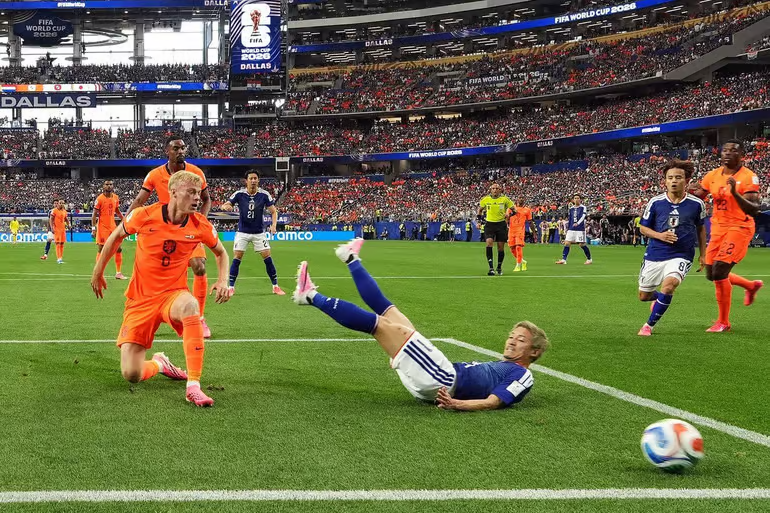
The Group F encounter between the Netherlands and Japan in the 2026 FIFA World Cup has developed into a tightly contested tactical battle, with both sides showing defensive discipline and moments of attacking intent but no breakthrough on the scoreboard so far.
Played at a high intensity, the match reflects two well-organised teams carefully balancing risk and control in a fixture that could prove decisive for progression in the group.
Even Start With High Tactical Discipline
Both teams have approached the match cautiously, prioritising structure over aggression in the opening stages.
Key early patterns include:
- Netherlands focusing on controlled possession and gradual build-up
- Japan pressing aggressively in midfield to disrupt rhythm
- Limited clear-cut chances in the final third
- Strong defensive organisation from both back lines
Neither side has been willing to overcommit, knowing how crucial this result is in a competitive group.
Netherlands Edge Possession, Japan Dangerous in Transition
The Dutch side has seen more of the ball, attempting to dictate tempo through midfield control, while Japan has relied on speed and quick transitions.
Notable trends:
- Netherlands attempting wide overloads to stretch Japan’s defence
- Japan creating danger through fast counter-attacks
- Midfield battles shaping the pace of the game
- Defenders on both sides stepping up with key interceptions
Japan’s compact structure has limited space for Dutch attackers to operate centrally.
Chances Limited but Momentum Shifts Emerging
Although the match remains goalless, both teams have had brief spells of momentum.
Highlights so far:
- Netherlands testing Japan with long-range efforts and crosses
- Japan threatening on counter-attacks from wide areas
- Goalkeepers remaining relatively untroubled but alert
- Set pieces emerging as a potential breakthrough route
The game remains finely balanced, with one moment likely to decide the outcome.
Tactical Contrast Shapes the Match
This fixture highlights two different football philosophies.
Netherlands approach:
- Structured possession play
- Emphasis on physical strength and aerial threat
- Controlled tempo and patient buildup
Japan approach:
- High pressing and energy-based defending
- Quick transitions and technical passing
- Compact shape designed to frustrate stronger opponents
The contrast has created a tactical chess match rather than an open attacking game.
Group Stakes Add Pressure
With Group F also including Sweden and Tunisia, every point carries significant importance.
Implications of the result:
- A win would place either team in a strong position for qualification
- A draw keeps the group tightly balanced
- Goal difference could become crucial later in the stage
Both sides appear aware that avoiding defeat may be as important as chasing victory.
Conclusion
The Netherlands vs Japan clash is unfolding as a disciplined and evenly matched contest, defined more by structure and strategy than attacking flair. While the scoreboard remains unchanged, the tactical intensity suggests the match could be decided by a single moment of quality or a late defensive lapse.
As the second half develops, both teams will need to decide whether to maintain caution or take greater risks in pursuit of three crucial points.