
World Cup 2026 Final: How Spain Beat Argentina 1–0 After Extra Time, Explained
By The USA HeadlineX News Desk
Updated: 2 November 2026
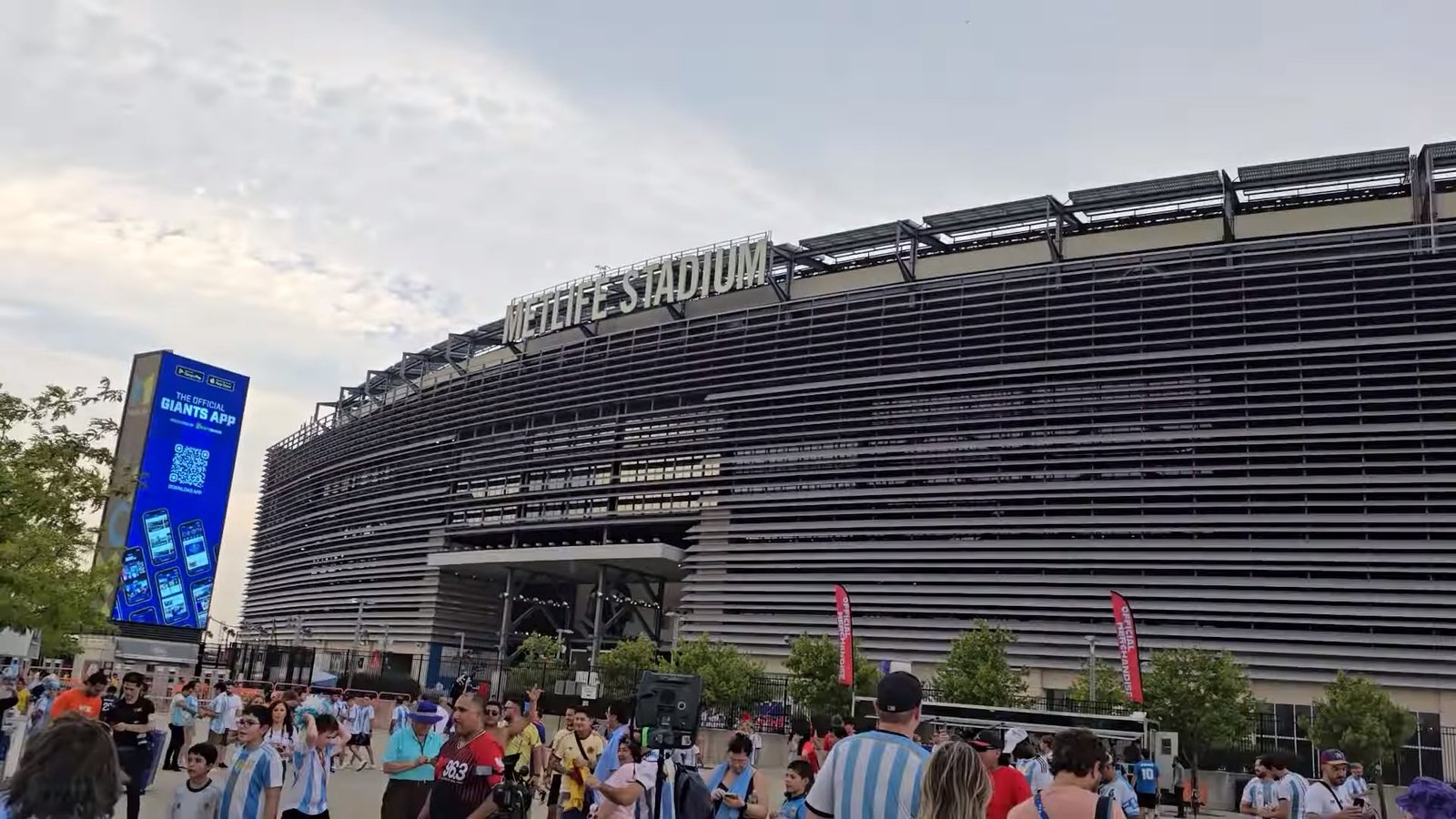
Confirmed: Spain beat Argentina 1–0 after extra time in the 2026 FIFA World Cup final on Sunday, 19 July 2026, at MetLife Stadium in East Rutherford, New Jersey. Ferran Torres scored the only goal in the 106th minute, assisted by Nico Williams, after Argentina had been reduced to ten men late in normal time. Spain won their second World Cup, their first since 2010. Reported, not an established fact: a later claim by Enzo Fernandez that Argentina would have won had the final reached a penalty shoot-out. That is one player’s opinion, reported months later. This is the World Cup 2026 final result Spain Argentina Messi what happened explainer: how Spain won, how both teams reached the final, and what the result meant for Lionel Messi. One paragraph of context on the England–Argentina semi-final is included, and no more.
World Cup 2026 final result Spain Argentina Messi what happened
The final was the last match of the first 48-team World Cup, played across the United States, Mexico and Canada. It was a meeting of the defending champions and the European champions: Argentina, winners in 2022, against Spain, winners of Euro 2024 under coach Luis de la Fuente. Spain had not lost a match in the tournament. Argentina had reached the final through four knockout matches that all went to the wire. The final followed Spain’s pattern — control, patience, and a late breakthrough — more closely than Argentina’s, which had been built on late escapes. Spain controlled the ball and created the chances; Emiliano Martinez kept the score level for 105 minutes; and then, in the first minute of the second period of extra time, Spain found the one goal the match had been waiting for.
The final: 105 minutes of resistance, then Torres in the 106th
Spain dominated the match on every measure reported in the match summaries. They finished with 20 shots to Argentina’s two, 12 of them on target, and about 65 per cent of possession, according to summaries from the Palm Beach Post and Squawka, which agree on the shot count and the possession share. The expected-goals figures in those summaries differ slightly, and this article does not choose between them. Argentina offered almost nothing as an attacking force for most of the match. One match report described Argentina as the first team on record not to attempt a single shot in normal time in a World Cup final since records of that kind began in 1966, while another summary described a Julian Alvarez effort in the second half. The two accounts conflict, and this article does not resolve them; it states only what is not in dispute, which is that Spain’s dominance was total and Argentina’s attacking threat was minimal until the closing minutes of extra time.
What kept Argentina in the match was Emiliano Martinez. He made 11 saves in total, a figure given in multiple post-match reports and described as a record for a World Cup final. He denied Lamine Yamal early, dealt with efforts from Dani Olmo, Rodri and Nico Williams, and, in the closing seconds of normal time, beat away a Yamal free-kick. Spain also had two goals disallowed: a Williams finish was ruled out for a foul by Mikel Merino on Nicolas Otamendi, and Torres later had a potential second goal disallowed for a marginal offside. Neither disallowed goal is presented here with a minute or a detailed VAR description, because the accounts checked differ on the detail. The confirmed shape is clear enough: Spain kept coming, Martinez kept them out, and the score stayed 0–0 through 90 minutes.
The match turned late in normal time, when Enzo Fernandez was sent off. Fernandez had already been booked, for dissent, and then received a second yellow card for a late challenge on Pau Cubarsi in second-half stoppage time. Reporting differs on the exact minute, and this article states the timing only as “late in normal time, in second-half stoppage time,” which is what the accounts agree on. Argentina therefore played all 30 minutes of extra time with ten men. The pressure told in the 106th minute, the first minute of the second period of extra time. Pedro Porro crossed from the right, Williams headed the ball back across the box, and Torres, a second-half substitute, volleyed it high into the net with his left foot. The scorer and minute, Torres in the 106th, are confirmed in the score summaries.
Argentina’s response, once behind, was their only sustained attacking spell of the match. Giuliano Simeone missed a chance to equalise, blazing over after a half-cleared corner, in what match reports describe as Argentina’s only real chance to force a penalty shoot-out. The final whistle confirmed Spain as champions, in front of more than 80,000 people at MetLife Stadium.
Spain’s path: unbeaten, and conceding once in eight matches
Spain’s route to the final was the most controlled run of the tournament. They topped Group H with seven points: a 0–0 draw with Cabo Verde, a 4–0 win over Saudi Arabia, and a 1–0 win over Uruguay. In the knockout stage, Spain beat Austria 3–0 and Portugal 1–0. The quarter-final, against Belgium, was their hardest match before the final: Fabian Ruiz gave Spain the lead, Charles De Ketelaere equalised — the first goal Spain had conceded — and Mikel Merino scored a late winner for a 2–1 victory. The semi-final, against France, ended 2–0 to Spain in Dallas on 14 July.
The defensive record is the headline of Spain’s tournament, stated here in the form given by the Associated Press: Spain allowed only one goal in eight matches, a record for fewest goals allowed by a champion in the reporting checked. The bench decided the two biggest matches: Merino’s late winner against Belgium, and Torres’s extra-time winner in the final, both from substitutes introduced by de la Fuente. Lamine Yamal, 19 during the tournament, was the attacking figure most often named in the reporting.
Argentina’s path: four escapes, and one semi-final
Argentina’s route to the final was the opposite of Spain’s: not control, but survival. They topped Group J, with reporting describing a 3–0 win over Algeria in which Messi scored a hat-trick on his 200th international appearance. In the round of 32, Argentina beat Cabo Verde 3–2 after extra time in Miami. In the round of 16, Argentina came from 2–0 down to beat Egypt 3–2 in Atlanta, with Cristian Romero, Messi and Enzo Fernandez scoring in the closing stages. In the quarter-final, Argentina beat Switzerland 3–1 after extra time in Kansas City, with Alexis Mac Allister opening the scoring from a Messi corner, Julian Alvarez scoring in the 112th minute, and Lautaro Martinez adding a late third.
The semi-final, against England in Atlanta on 15 July, is given one paragraph of context here, and no more. England led through Anthony Gordon’s goal after the hour; Enzo Fernandez equalised with five minutes of normal time left; and, two minutes into stoppage time, Messi crossed for Lautaro Martinez to head the winner, sending Argentina to the final 2–1. Messi provided both assists. That semi-final explains why Argentina arrived in New Jersey drained, with two extra-time matches already behind them, against a team that had controlled every match it played. No minute-by-minute account of the semi-final is given here.
Messi, the final, and what happened next
For Messi, the final was the end of a World Cup story that had begun with triumph in 2022. He was 39, playing in what reporting described as his sixth World Cup, and Argentina were trying to become the first team since Brazil in 1962 to retain the trophy. They fell one win short. In the final itself, Messi played what match reports describe as a peripheral role, starved of service and marshalled by Spain’s defence. He did not score in the final. Reporting after the match described the final as likely his last international appearance, and that proved to be the shape of what followed: on 31 August 2026, Messi announced his retirement from international football, and on 6 October 2026 he played his farewell match, a 3–0 friendly win over Benin, scoring a penalty and assisting the other two goals in his 208th and final appearance. The full farewell story is a separate topic and is not retold here beyond those confirmed facts.
Messi’s words after the farewell belong in this article only in short form. After the Benin match, Messi was reported as describing the farewell as “the saddest day of my career,” and as saying he would miss defending Argentina’s colours but would now support the team from the other side. No quotation from the World Cup final itself is asserted, because no sourced Messi quotation from immediately after the final was confirmed in the checks for this draft. Later, in October 2026, Fernandez was reported as claiming that Argentina would have won the final had it reached penalties. That is one player’s retrospective opinion. Spain won 1–0, in extra time, before any shoot-out was reached. The same care applies to a later claim, reported in October 2026, that Martinez played the final with a fractured finger. That claim comes from Fernandez’s later interview as reported, was not confirmed in contemporaneous final reporting checked, and is not asserted as fact here.
Spain left New Jersey as winners of a second men’s title, 16 years after their first in 2010. The 2026 final echoed the 2010 final: both were 1–0 wins after extra time. What the 2026 win established was a generational shift the final displayed: Spain’s youngest players deciding the biggest match, Argentina’s greatest player leaving the international stage weeks later, and a team built on control beating a team built on escapes. One goal, in the 106th minute, from a substitute, after 105 minutes of resistance, was enough.
Frequently asked questions
What was the result of the World Cup 2026 final?
Spain beat Argentina 1–0 after extra time on 19 July 2026 at MetLife Stadium in East Rutherford, New Jersey. Ferran Torres scored the only goal in the 106th minute, assisted by Nico Williams. Spain won their second World Cup, their first since 2010.
Who scored in the World Cup 2026 final, and when?
Ferran Torres scored in the 106th minute, in the first minute of the second period of extra time. Pedro Porro crossed from the right, Nico Williams headed the ball back across the box, and Torres volleyed it into the net. No other goal was scored, although Spain had two goals disallowed during the match.
How did Spain reach the final?
Spain topped Group H with seven points, then beat Austria 3–0, Portugal 1–0, Belgium 2–1 in the quarter-final, and France 2–0 in the semi-final. They did not lose a match and conceded only one goal in eight matches, according to Associated Press reporting.
How did Argentina reach the final, and what happened to Messi afterwards?
Argentina topped Group J, then beat Cabo Verde 3–2 after extra time, Egypt 3–2, Switzerland 3–1 after extra time, and England 2–1 in the semi-final. Messi did not score in the final. On 31 August 2026 he announced his retirement from international football, and on 6 October 2026 he played his farewell match, a 3–0 win over Benin, in his 208th and final appearance for Argentina.
Related coverage: our explainer on Harry Kane’s Ballon d’Or and our explainer on Messi’s Argentina farewell against Benin.
SOURCES
- Associated Press, via WVLT, “Spain wins the World Cup by beating Argentina 1-0 on Ferran Torres’ goal in extra time,” 19 July 2026 — https://www.wvlt.tv/2026/07/19/spain-wins-world-cup-by-beating-argentina-1-0-ferran-torres-goal-extra-time/
- Palm Beach Post, “Spain beats Argentina, wins the 2026 World Cup after Ferran Torres goal,” 19 July 2026 — https://www.palmbeachpost.com/story/sports/soccer/world-cup/2026/07/19/argentina-spain-live-score-world-cup-updates/90922961007/
- Squawka, “World Cup Final: result, stats & highlights” — https://www.squawka.com/en/news/world-cup/spain-argentina-world-cup-final-result/
- Flashscore, “Extra-time winner sees Spain finally see off 10-man Argentina to win second World Cup,” July 2026 — https://www.flashscore.com.ng/news/soccer-world-cup-final–2026-spain-argentina-report/6oVJsCk5/
- Sportskeeda, “‘If we had reached penalties, we would have won the FIFA World Cup’ — Argentina star makes bold claim after loss in final against Spain,” 29 Oct 2026 — https://www.sportskeeda.com/football/news-if-reached-penalties-won-fifa-world-cup-argentina-star-makes-bold-claim-loss-final-spain
- ESPN, “Messi tracker: Goals, assists, key moments in 2026” (England semi-final, 15 July 2026) — https://www.espn.ph/football/story/_/id/47978642/lionel-messi-2026-tracker-inter-miami-argentina-games-goals-assists-stats
- Reuters, “Messi set for long-awaited first England clash in World Cup semi-final,” 12 July 2026 — https://www.reuters.com/sports/soccer/messi-set-long-awaited-first-england-clash-world-cup-semi-final-2026-07-12/
- People, “Lionel Messi Sends Emotional Message to Argentina Fans After Farewell Game: ‘Saddest Day of My Career’,” Oct 2026 — https://people.com/lionel-messi-sends-emotional-message-to-argentina-fans-after-farewell-game-12162431
- Associated Press, via Britannica, “Messi caps Argentina farewell with a penalty and 2 assists in a 3-0 win over Benin,” 6 Oct 2026 (farewell facts only) — https://www.britannica.com/news/1550939/a732d7dbc2c2095cc74e09097ac1878f