
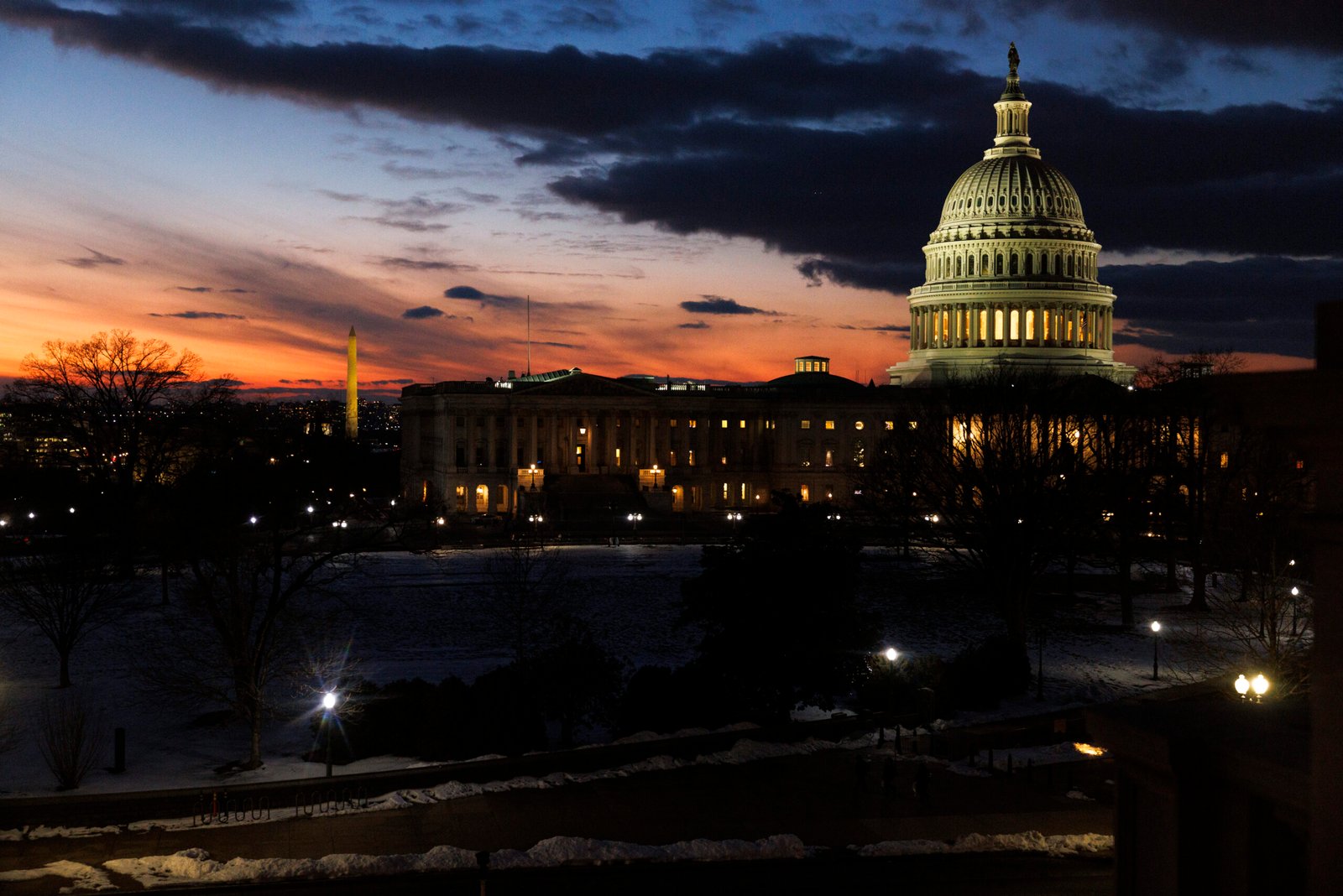
Confirmed: “divided government” means the presidency and at least one chamber of Congress are held by different parties, and the two institutions must share power whether they want to or not. Not yet known: whether the United States will have divided government after 3 November 2026. That depends on an election that has not happened. This article therefore works entirely in the conditional: if Democrats win the House, the Senate, or both, while Donald Trump, a Republican, remains president for two more years, what could a Democratic Congress do, what could it not do, and where would the real leverage lie?
The short answer, reported by USA TODAY on 20 October 2026 after interviews with congressional leaders from both parties, is that even a Democratic sweep of Congress would run quickly into two barriers — the Senate filibuster and the president’s veto — that would make much of the Democratic agenda hard to enact as law. The longer answer is that Congress has powers that do not need the president’s signature at all: oversight, subpoenas, control of what gets voted on, the power to block or slow presidential appointees, and the power of the purse over bills the government cannot run without. Divided government is not no government. It is government by negotiation, standoff and deadline — and, sometimes, by investigation.
This article does not duplicate the 2026 midterm elections explainer, which covers the election itself. Read that article for the election; read this one for the mechanics of what follows if control changes hands. For the Senate rule at the centre of this story, see the filibuster explainer.
Three versions of divided government
Divided government comes in degrees, and the degree matters more than the label. If Democrats win only the House, they gain the House’s powers — agenda, hearings, subpoenas, passing bills that then go to a Republican Senate — but most Democratic bills would stop in the Senate. If Democrats win only the Senate, they gain control of confirmations and the Senate agenda, but the Republican House can block Democratic bills. If Democrats win both chambers, they gain the full legislative agenda and oversight apparatus, but still face the filibuster and the veto.
The Senate arithmetic is the first constraint in every version. Republicans currently hold the Senate 53–47, according to reporting checked for this draft, with the Democratic total including two independents who caucus with Democrats. Democrats would need to net four seats to reach 51 — not three, because a 50–50 Senate would be broken by Vice President JD Vance’s tie-breaking vote. Even a bare Democratic majority of 51 would be nine votes short of the 60 needed to end a filibuster, and 16 short of the 67 needed to override a veto. See also the Texas Senate race explainer.
The three obstacles: filibuster, veto, courts
| Obstacle | What overcomes it | Who controls it |
|---|---|---|
| Senate filibuster | 60 votes to invoke cloture on most bills | The Senate minority, unless the rule changes or cross-party votes are won |
| Presidential veto | Two-thirds of each chamber: 290 House (if all vote), 67 Senate | The president, unless Congress assembles a veto-proof supermajority |
| Courts | A law must survive constitutional/statutory challenge; a constitutional ruling cannot be overridden by ordinary statute | Federal courts, up to the Supreme Court |
The filibuster. Sixty votes are needed to overcome a filibuster on most legislation, meaning Democrats would need help from a few Republicans — “an unlikely prospect given the hyperpartisan climate in Washington,” USA TODAY reported. The Senate’s history explains the number: the cloture threshold was reduced in 1975 from two-thirds of senators voting to three-fifths of all senators duly chosen and sworn, or 60 of 100. Nominations were later exempted by precedent changes in the 2010s, but legislation was not. A Democratic majority could in theory change the rule, but changing it requires its own members to agree, and in 2022 two Democratic senators blocked a filibuster reform. The filibuster binds whichever party holds a narrow majority.
The veto. President Trump “has said he would use his veto power to block many Democratic priorities and keep them from becoming law,” USA TODAY reported. Overriding a veto requires two-thirds in both chambers. “Even if there’s a blue wave in the midterms, Democrats are unlikely to come close to those numbers,” USA TODAY added.
The courts. A law passed and signed can still be struck down as unconstitutional, and executive actions by a president facing an opposition Congress can themselves be challenged and blocked while cases proceed. The Supreme Court’s 2026–27 term, opened 5 October 2026, includes cases on climate lawsuits, AR-15 bans, proof of citizenship for registration, and third-country removals, with decisions due by late June or early July 2027 — see the Supreme Court term explainer.
The Iran-war funding fight: the sharpest test
The clearest illustration is the war in Iran. Democrats have pledged to end what USA TODAY described as the eight-month-old war, which Reuters reported began on 28 February 2026 without Congress having secured approval before it was launched. “But there’s not a lot they can do to ensure it happens,” USA TODAY reported. A bill to end the war would need 60 Senate votes, a House majority, and the president’s signature or a veto override. None is available to a narrow Democratic majority on its own.
What Democrats could do instead, USA TODAY reported, is try to limit or cut off funding by inserting provisions into must-pass bills, such as the Defense Department’s budget, barring federal funds from being used in operations in Iran. Trump would probably veto such legislation, USA TODAY added, “setting up a confrontation with Congress that could lead to another government shutdown.” That sentence contains the whole logic of divided government: the funding bill is the leverage, the veto is the counter-leverage, and the shutdown is the cost if neither side moves.
Shutdown risk, and why deadlines are the battlefield
Federal agencies need appropriations laws to spend money. When those laws lapse without a continuing resolution or new bill, parts of the government shut down. Under divided government, each funding deadline becomes a negotiation in which each side can attach demands — on the war, immigration enforcement, health-care subsidies — to the bill that keeps the government open. The reporting checked describes shutdown risk as a live consequence of a veto confrontation over Iran-war funding.
What a Democratic Congress CAN do without the president
Oversight and subpoenas. Control of either chamber gives Democrats subpoena power and funding for investigative staff, USA TODAY reported, citing Capitol Hill staffers, lawmakers and attorneys who spoke to Reuters. Investigations could begin as early as February, when the new Congress sits. In the House, efforts would be led by Representative Jamie Raskin of Maryland, top Democrat on Judiciary, and Representative Robert Garcia of California, top Democrat on Oversight, USA TODAY reported.
Blocking appointees and impeachment. USA TODAY reported Democrats could push to impeach cabinet members, naming Defence Secretary Pete Hegseth — criticised over the Iran war and over firing or sidelining senior military officials — and Health and Human Services Secretary Robert F. Kennedy Jr. — criticised over vaccines and pushing out health officials. Impeachment requires a House majority to impeach and two-thirds of the Senate (67) to convict and remove. The House half is available to a Democratic House majority; the Senate half is not available to any narrow majority. The same arithmetic applies to the president, impeached twice but acquitted in his first term: USA TODAY reported top Democratic leaders have said impeachment is not a priority, that Leader Hakeem Jeffries told reporters in September no decisions had been made, and that Jeffries refused to rule it out. Impeachment talk is best read as intent and pressure, not likely removal.
What could actually pass
Only bills that can assemble a presidential signature or a veto-proof supermajority, or that ride on a must-pass vehicle both sides need, are likely to become law in 2027–28. The first category is bipartisan bills: USA TODAY reported one area with bipartisan potential, identified by Democratic strategist Josh Schwerin — artificial-intelligence safety paired with guardrails against data centres, “more transparency, tech companies paying for grid and infrastructure upgrades, and tough clean air and water standards” — an area Senate Majority Leader John Thune, a Republican, has also prioritised. The same logic applies to Ukraine aid, if Reuters’ assessment of veto-proof support is correct.
Frequently asked questions
What is divided government?
Divided government means the presidency and at least one chamber of Congress are controlled by different parties. The president cannot pass laws alone, and Congress cannot pass laws over a veto without two-thirds majorities, so the two must negotiate, or government stalls at deadlines.
Could a Democratic Congress end the war in Iran by passing a law?
Not by a freestanding bill alone, on the reporting checked. Such a bill would need 60 Senate votes, a House majority, and the president’s signature or a veto override. Democrats could instead attach funding restrictions to must-pass defence and spending bills, force War Powers votes, and require officials to testify — all facing a likely veto and possible shutdown confrontation.
What can Congress do without the president’s agreement?
A chamber majority can hold hearings, issue subpoenas, control what bills get voted on, and — in the Senate — block or slow presidential appointees. The House can impeach by a majority, though removal requires 67 Senate votes. None of those powers needs a presidential signature.
Would anything get done under divided government?
Bills with bipartisan supermajority support, and must-pass bills carrying negotiated compromises, could pass. Party-line Democratic bills would face the filibuster and a likely veto. AI safety rules and Ukraine aid are cited in reporting as areas where bipartisan majorities may exist; large new party-line programmes are unlikely to become law.
Updated: 29 October 2026. This article is conditional on the 3 November 2026 election result, which had not happened when it was written. No outcome is predicted.
SOURCES
- USA TODAY, “What a Democratic Congress would mean, in spite of Trump’s veto pen”, 20 October 2026 — https://www.usatoday.com/story/news/politics/elections/2026/10/20/midterm-elections-congress-agenda-democrats-trump/92235759007/
- Reuters (Patricia Zengerle), “Explainer: Four ways US foreign policy could change if Democrats win in November”, 25 October 2026, via Superhits 97.9 — https://superhits979.com/2026/10/25/explainer-four-ways-us-foreign-policy-could-change-if-democrats-win-in-november/
- U.S. Senate, “About Filibusters and Cloture | Historical Overview” — https://www.senate.gov/about/powers-procedures/filibusters-cloture/overview.htm?