
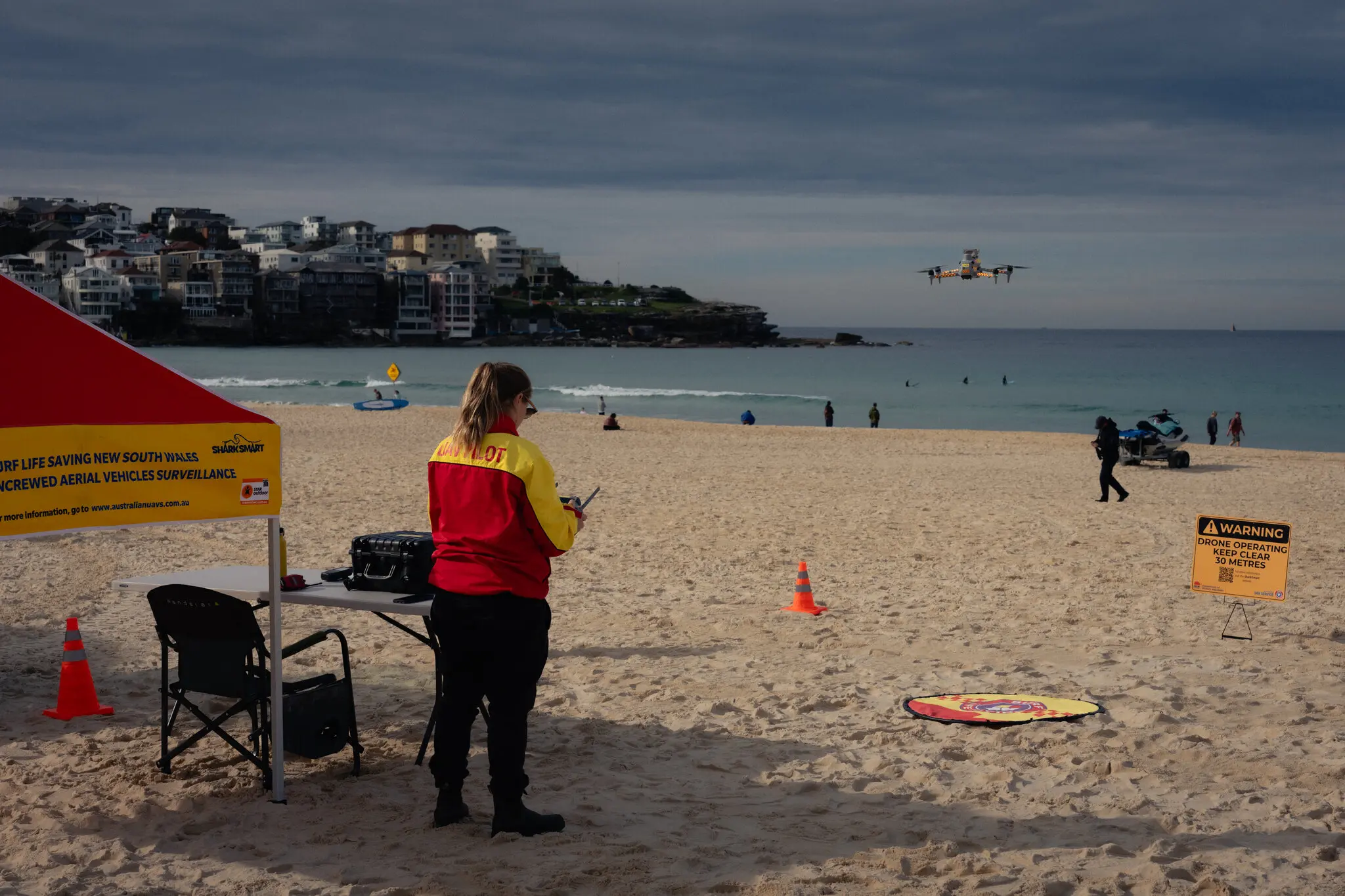
Australia is expanding its use of drone technology to protect swimmers after a series of shark attacks and sightings increased concerns along popular beaches. Authorities are investing in advanced aerial monitoring systems that allow lifeguards to detect sharks from above and warn beachgoers before dangerous encounters occur.
The move reflects a growing shift toward technology-based ocean safety solutions as officials search for ways to reduce risks while protecting marine ecosystems.
Rising Shark Encounters Raise Safety Concerns
Several shark incidents along Australia’s coastline have increased public concern, particularly in New South Wales, where beaches attract millions of swimmers and surfers each year.
Recent incidents have led authorities to focus on:
- Improving early shark detection
- Increasing beach surveillance
- Providing faster warnings to swimmers
- Reducing the risk of human-shark encounters
Officials say the goal is not to eliminate sharks from Australian waters but to provide better information and faster responses when sharks are detected.
How Shark-Spotting Drones Work
The new drone programs use aerial cameras operated by trained surf lifesavers to monitor ocean areas near beaches.
The technology allows teams to:
- Scan large areas of water quickly
- Identify sharks near swimmers
- Track shark movement patterns
- Alert lifeguards and beachgoers
- Temporarily close beaches when necessary
Some programs are also exploring artificial intelligence systems to improve shark detection accuracy and support faster decision-making.
New South Wales Expands Drone Surveillance
New South Wales has significantly increased investment in shark monitoring technology following recent attacks and sightings.
The expanded program includes:
- Year-round drone surveillance at dozens of beaches
- Increased coverage across Sydney and coastal regions
- AI technology trials for improved detection
- Integration with existing shark safety measures
Authorities describe the investment as a way to put “more eyes in the sky” and provide earlier warnings rather than relying only on traditional patrol methods.
Drones Improve Detection but Cannot Guarantee Safety
Marine experts say drone technology is a valuable safety tool, but it is not a complete solution.
Challenges remain:
- Sharks can move quickly through coastal waters
- Weather conditions can affect visibility
- False alarms may increase beach closures
- Detection does not always prevent encounters
Researchers note that increased drone monitoring may actually lead to more shark sightings because authorities are observing the ocean more frequently than before.
Balancing Public Safety and Marine Conservation
The increase in shark monitoring has also renewed discussions about how Australia should manage shark risks.
Some communities have called for stronger measures, while marine experts argue that conservation must remain part of the response.
Key considerations include:
- Protecting swimmers
- Preserving marine ecosystems
- Avoiding unnecessary harm to shark populations
- Using science-based safety strategies
Experts emphasize that sharks play an important role in ocean ecosystems and that technology-based monitoring offers a safer alternative to widespread removal programs.
Technology Changing the Future of Beach Safety
Australia’s drone programs represent a broader trend of using technology to improve public safety.
Future developments may include:
- AI-powered shark recognition
- Automated warning systems
- Better integration with mobile safety apps
- More accurate marine monitoring tools
As coastal populations grow and more people participate in ocean activities, technology will likely become a larger part of beach safety strategies.
Conclusion
Australia’s decision to expand shark-spotting drone programs shows how technology is changing the way coastal communities respond to marine risks. While drones cannot completely prevent shark encounters, they provide valuable early warnings and help lifeguards make faster decisions. As shark sightings continue to attract attention, Australia’s approach highlights the challenge of protecting swimmers while maintaining a healthy ocean environment.