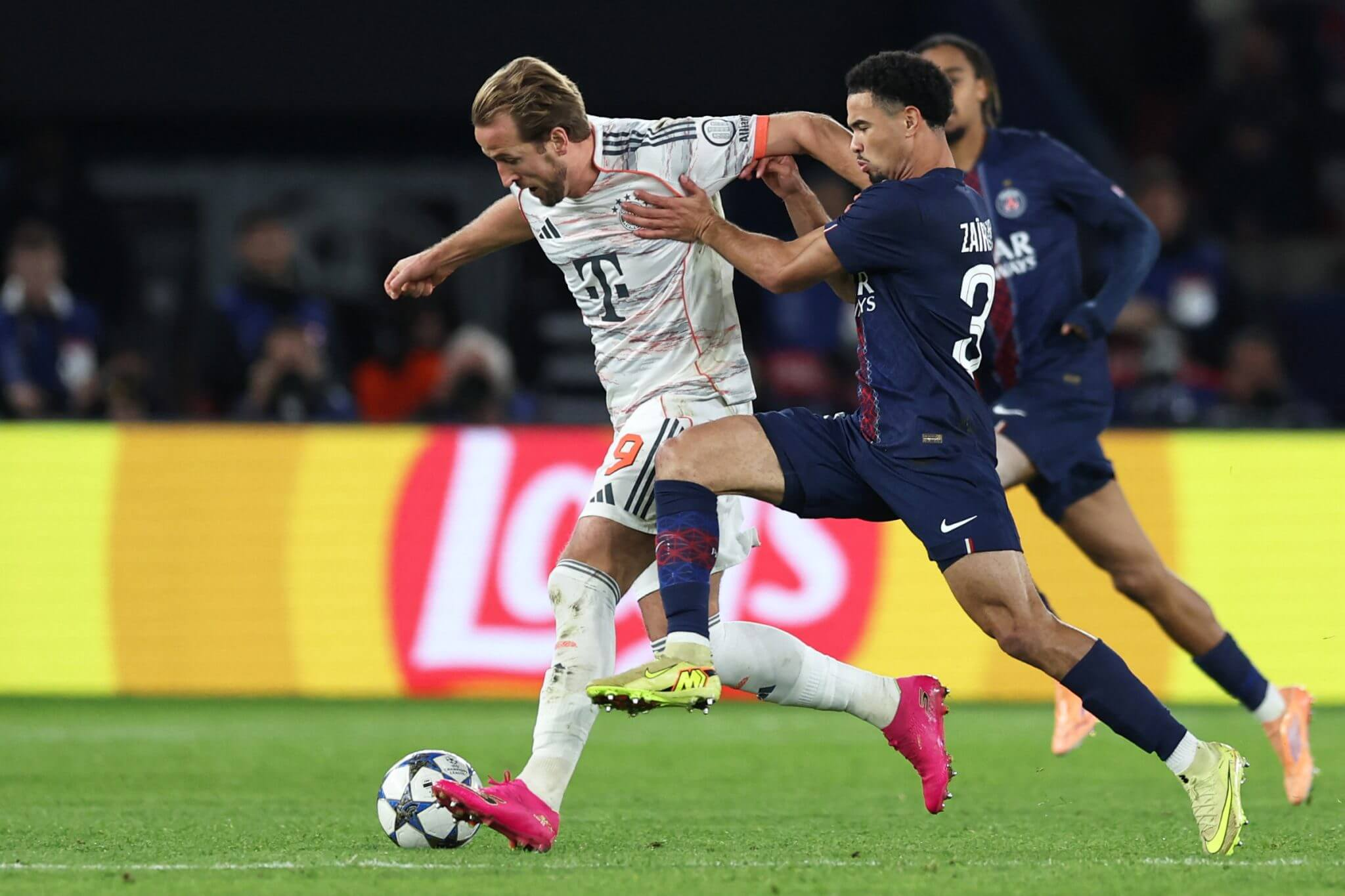
The Champions League semifinal first leg between Paris Saint-Germain and Bayern Munich delivered one of the most dramatic matches in recent memory, ending in a chaotic 5–4 victory for PSG. Beyond the scoreline, the match offered deeper tactical lessons about elite European football, especially in how top teams manage attacking intensity, defensive control, and momentum shifts.
From the opening minutes, both sides committed fully to attacking football. Bayern struck first through Harry Kane, but PSG responded quickly, exposing Bayern’s defensive gaps with rapid transitions and sharp finishing from Khvicha Kvaratskhelia and Ousmane Dembélé. By halftime, PSG had already taken control, and the match was trending toward a one-sided result.
One of the clearest lessons from the game is the importance of game management at the highest level. PSG built a commanding 5–2 lead early in the second half, yet they nearly allowed Bayern to complete an extraordinary comeback. Two late goals from Bayern reduced the deficit to 5–4, exposing PSG’s vulnerability when they shifted into a more passive defensive shape. That phase of the match highlighted how elite teams can lose control even with a three-goal advantage if concentration drops for just a few minutes.
Another key takeaway is Bayern’s resilience and attacking structure. Even when trailing heavily, Bayern maintained their pressing intensity and continued creating chances through Michael Olise, Jamal Musiala, and Kane. Their ability to recover from 5–2 down showed why they remain one of Europe’s most dangerous teams in transition. However, their defensive instability, especially in dealing with PSG’s pace in wide areas, ultimately cost them the result.
For PSG, the match reinforced both their attacking strength and defensive concerns. Their front line, led by Dembélé and Kvaratskhelia, consistently punished Bayern’s high defensive line with direct runs and quick combinations. PSG’s ability to score five goals against a top European defense reflects their evolution into one of the most efficient attacking sides in the competition. However, their defensive lapses—particularly in the final 25 minutes—raise questions about their ability to close out high-pressure knockout matches.
Tactically, the game also illustrated the modern Champions League trend toward high-risk, high-reward football. Both teams prioritized attacking output over defensive caution, resulting in constant transitions, open spaces, and a record-breaking goal tally for a semifinal stage. While entertaining, it also exposed the thin margins at this level: small mistakes in structure or focus quickly turn into goals.
Ultimately, PSG take a narrow advantage into the second leg, but the tie remains wide open. The biggest lesson for both teams is clear: attacking brilliance alone is not enough in knockout football. Control, discipline, and emotional stability under pressure are equally decisive.
As the second leg approaches, Bayern will look to refine their defensive organization while maintaining their attacking threat, while PSG must prove they can manage a game as effectively as they can dominate one.
One thing is certain—the rivalry between these two sides continues to define modern European football at its most explosive and unpredictable level.