
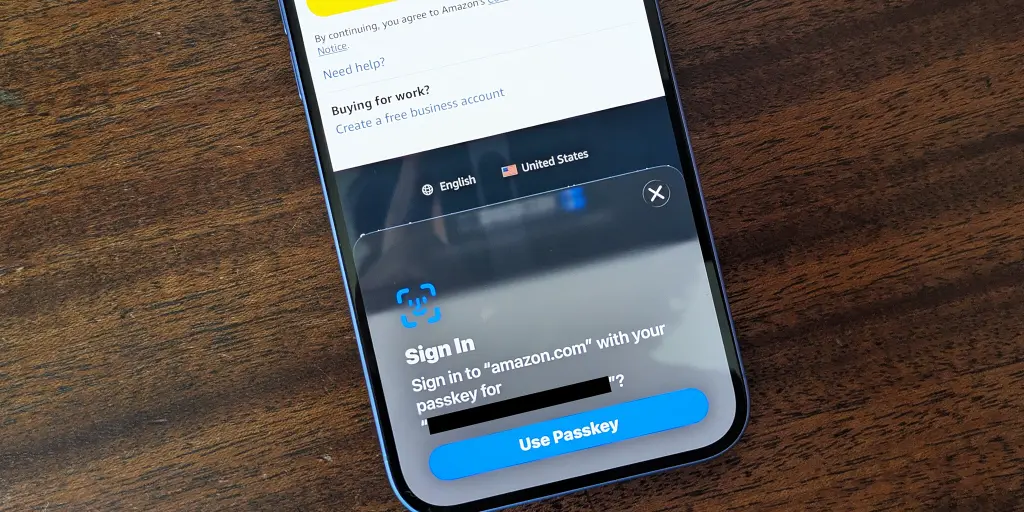
Passwords may finally be entering their decline. Major technology companies including Apple Inc., Google, and Microsoft are increasingly pushing users toward passkeys — a newer login system designed to make online accounts both easier to access and significantly harder to hack.
Passkeys are being promoted as the future of authentication because they remove many of the weaknesses associated with traditional passwords, including phishing attacks, password reuse, and stolen credentials.
As cybersecurity threats continue rising worldwide, the shift toward passwordless security is becoming one of the biggest changes in how people protect their digital accounts.
What Is a Passkey?
A passkey is a passwordless login credential stored securely on your device, such as a smartphone, tablet, or computer. Instead of typing a password manually, users authenticate themselves using:
- Fingerprint recognition
- Face ID
- Device PIN
- Biometric authentication
Behind the scenes, passkeys use cryptographic key pairs:
- A public key stored by the website or app
- A private key stored only on the user’s device
When logging in, the device proves ownership of the private key without ever exposing it to the website or transmitting it online.
Why Passwords Are Becoming a Problem
Traditional passwords have long been considered one of the weakest points in cybersecurity.
Many users:
- Reuse passwords across multiple sites
- Choose weak or predictable passwords
- Fall victim to phishing scams
- Store passwords insecurely
Even two-factor authentication (2FA) has not fully solved these issues because attackers increasingly exploit SMS codes, fake login pages, and social engineering techniques.
Cybersecurity experts argue that passwords depend too heavily on human behavior, making them vulnerable by design.
Why Passkeys Are Considered More Secure
Passkeys are widely viewed as safer because they eliminate the “shared secret” problem of passwords.
With passwords:
- Websites store password-related data
- Attackers can steal credentials during breaches
- Users can accidentally give passwords to phishing sites
With passkeys:
- The private key never leaves the device
- There is no password database to steal
- Fake websites cannot trick users into typing credentials
Security researchers describe passkeys as “phishing-resistant” because users never manually enter sensitive login information.
How Passkeys Actually Work
The technology behind passkeys is based on standards called:
- FIDO2
- WebAuthn
When creating a passkey:
- A website requests a login credential
- Your device generates a public and private cryptographic key pair
- The public key is stored by the website
- The private key remains securely on your device
Later, when signing in, the site sends a challenge and your device confirms ownership of the private key using biometrics or device authentication.
This process happens almost instantly in the background.
Tech Companies Are Rapidly Expanding Passkey Support
Over the past two years, passkey support has expanded rapidly across major platforms.
Companies adopting passkeys include:
- Apple Inc.
- Microsoft
- PayPal
- Amazon
- eBay
Modern browsers, smartphones, and operating systems increasingly support cross-device passkey syncing as well.
Users Like the Convenience — But Some Concerns Remain
Many users appreciate that passkeys remove the need to remember complicated passwords.
Online discussions frequently describe passkeys as:
- Faster to use
- Easier for non-technical users
- More secure against phishing
- Less frustrating than password resets
However, critics still raise concerns about:
- Device dependency
- Cross-platform compatibility
- Account recovery if devices are lost
- Reliance on large tech ecosystems like Apple or Google
Some cybersecurity experts also argue that passkeys do not eliminate every security risk, especially if account recovery systems remain weak.
Could Passkeys Replace Passwords Completely?
Technology companies clearly hope so, but the transition will likely take years.
Passwords remain deeply embedded across:
- Banking systems
- Enterprise software
- Government services
- Legacy websites
Experts predict the near future will involve hybrid systems where passwords and passkeys coexist until adoption becomes widespread.
Still, the direction of the industry appears increasingly clear: authentication is shifting away from memorized passwords and toward device-based cryptographic security.
Conclusion
Passkeys represent one of the most significant changes in internet security in decades. By removing traditional passwords from the login process, technology companies hope to reduce phishing attacks, account breaches, and user frustration all at once.
While challenges around compatibility and recovery remain, passkeys are quickly becoming a central part of the future of online authentication.
For users tired of forgotten passwords and constant security warnings, that future may arrive sooner than expected.