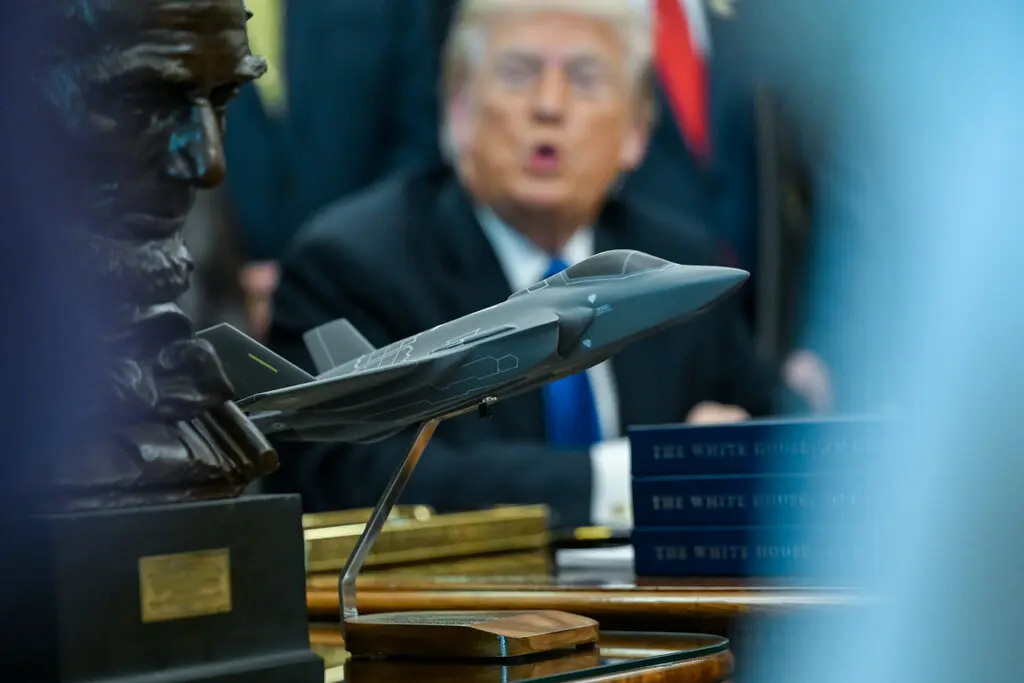
President Donald Trump has indicated that the United States is prepared to explore restoring Türkiye’s access to the F-35 fighter jet program, marking a potential reversal of a policy that has shaped US–Turkey defence relations since 2019. The announcement comes ahead of meetings with Turkish President Recep Tayyip Erdoğan during the NATO Summit in Ankara and follows discussions about lifting US sanctions imposed over Türkiye’s purchase of the Russian S-400 missile defence system.
Why Turkey Was Removed from the F-35 Program
Türkiye was suspended from the multinational F-35 program in 2019 after acquiring Russia’s S-400 air defence system.
The United States argued that:
- The S-400 could compromise sensitive F-35 technology.
- The Russian system was incompatible with NATO defence networks.
- US law required sanctions under the CAATSA legislation.
- Türkiye’s participation in the F-35 program had to be suspended until the issue was resolved.
Trump Seeks to Improve US–Turkey Defence Relations
Trump’s latest position signals a significant shift in Washington’s approach toward Ankara.
According to officials, the administration is considering:
- Restoring Türkiye’s participation in the F-35 program.
- Lifting CAATSA sanctions imposed on the Turkish defence sector.
- Expanding defence cooperation between NATO allies.
- Finding a legal pathway that complies with existing US law.
However, administration officials acknowledge that legal and congressional restrictions remain significant obstacles.
Congress Could Still Block Any Agreement
Even if the White House supports the proposal, Congress retains substantial authority over arms sales.
Key challenges include:
- Existing legislation linked to the S-400 system.
- Congressional concerns over technology security.
- Opposition from lawmakers who support maintaining restrictions.
- Legal requirements that may prevent immediate implementation.
Analysts note that any agreement would likely require additional negotiations and legal review before becoming official.
Strategic Importance for NATO
Restoring Türkiye’s access to the F-35 program would have broader implications for NATO.
Potential benefits include:
- Strengthening NATO’s southeastern flank.
- Improving alliance interoperability.
- Expanding regional air defence capabilities.
- Reinforcing military cooperation between the United States and Türkiye.
Supporters argue that Türkiye’s strategic location makes it an important ally for NATO operations across Europe, the Middle East, and the Black Sea region.
Regional Concerns Remain
The proposal has also generated concern among some US partners in the Middle East.
Critics argue that:
- Advanced fighter aircraft could alter the regional military balance.
- The unresolved S-400 issue continues to raise security questions.
- Any policy reversal should include safeguards protecting NATO technology.
These concerns are expected to be part of ongoing diplomatic discussions during and after the NATO summit.
What Happens Next?
While Trump’s comments represent the strongest indication yet that Washington is willing to revisit Türkiye’s F-35 status, no final agreement has been announced.
The next steps are expected to include:
- Bilateral discussions between Trump and Erdoğan.
- Legal review of congressional restrictions.
- Negotiations over the future of the S-400 system.
- Further consultation with NATO allies regarding defence cooperation.
Conclusion
President Trump’s willingness to consider restoring Türkiye’s access to the F-35 fighter jet program marks a potentially significant shift in US–Turkey relations. Although major legal and political hurdles remain, the discussions highlight a broader effort to strengthen NATO cooperation and improve defence ties between the two allies. Whether the proposal becomes reality will depend on congressional approval, legal requirements, and future negotiations over Türkiye’s S-400 missile system.