British Prime Minister Keir Starmer has resigned as both Prime Minister and leader of the Labour Party following mounting internal pressure, declining approval ratings, and a series of electoral setbacks that weakened his authority within government and his party. He confirmed he will remain as caretaker Prime Minister until a new Labour leader is selected in the coming weeks.
The resignation marks a major turning point in UK politics, coming less than two years after Labour’s landslide election victory in 2024.
Resignation After Mounting Internal Pressure
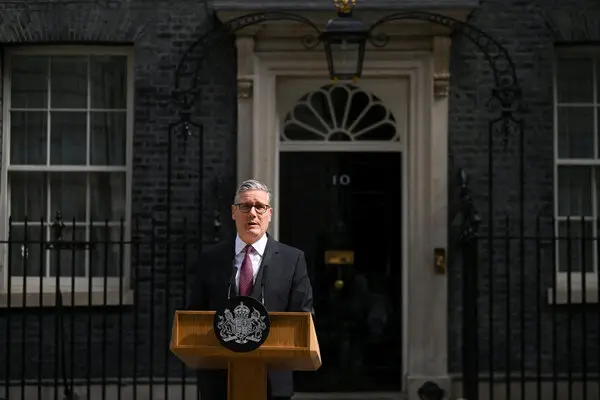
Starmer announced his decision during a public address outside 10 Downing Street, where he acknowledged that he no longer had sufficient support within his party to continue effectively.
Key factors behind the resignation include:
- Growing internal revolts within the Labour Party
- Declining public approval ratings
- A series of policy criticisms and governance challenges
- Poor performance in recent local and by-elections
- Increasing leadership instability inside the Cabinet
He emphasised that stepping down was necessary to ensure a smooth transition of leadership.
Caretaker Role and Transition Plan
Despite resigning, Starmer will remain in office temporarily until Labour selects a new leader.
Current transition timeline:
- Starmer remains caretaker Prime Minister
- Labour leadership nominations expected to open in early July
- A new leader could be in place before Parliament returns from summer recess
- Formal leadership contest expected within weeks
This arrangement is intended to prevent a sudden governance vacuum during a politically sensitive period.
Andy Burnham Emerging as Leading Successor
Greater Manchester Mayor Andy Burnham has emerged as the frontrunner to succeed Starmer, with several potential rivals stepping aside or declining to contest the leadership.
Political dynamics include:
- Burnham positioning himself as a unifying candidate
- Wes Streeting and other senior figures reportedly not entering the race
- Growing expectation of a relatively uncontested leadership transition
- Strong support from sections of the Labour Party base
His leadership bid is expected to shape the future direction of the Labour government.
Reasons Behind Labour’s Internal Crisis
Starmer’s resignation follows a broader decline in Labour’s political stability, driven by both internal and external pressures.
Contributing issues include:
- Policy disagreements within the party
- Cabinet resignations and internal disputes
- Criticism over economic performance and public services
- Loss of voter confidence in key constituencies
- Rising competition from opposition parties, including Reform UK
These pressures gradually eroded his political authority despite early electoral success.
Market and Political Reaction
Financial markets have remained relatively stable following the announcement, with analysts noting that the resignation had been widely anticipated.
Key reactions:
- Limited immediate movement in sterling and UK bond markets
- Investors focused on long-term fiscal direction rather than leadership change
- Concerns about future policy shifts under a new Labour leader
- Attention on upcoming leadership contest outcomes
What Happens Next in UK Politics
The resignation triggers a leadership transition that will shape the UK’s political direction for years to come.
Upcoming developments:
- Labour leadership contest formally launched
- Selection of new Prime Minister within weeks
- Potential policy realignment under new leadership
- Increased political competition ahead of future national elections
Conclusion
Keir Starmer’s resignation closes a short but turbulent chapter in UK politics, defined by initial electoral success followed by growing internal division and declining confidence. As Labour prepares to choose a new leader, the focus now shifts to whether the party can restore stability and maintain its governing mandate in an increasingly fragmented political environment.