
Saudi Arabia says its air defenses intercepted and destroyed a drone launched by Yemen’s Houthi forces south of Mecca before it could enter the holy city’s restricted airspace. The incident happened Tuesday evening and was announced by the Saudi-led military coalition on September 16, 2026.
The incident has increased tensions between Saudi Arabia and the Houthis as fighting expands across Yemen and the wider Middle East. Saudi officials warned that the security of Islam’s two holiest sites and pilgrims is a “red line.”
Drone Intercepted South of Mecca
According to coalition spokesperson Turki al-Malki, Saudi air defenses detected the Houthi drone and destroyed it before it entered prohibited airspace over Mecca. Saudi authorities said the incident occurred on Tuesday evening.
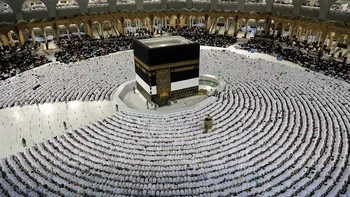
Mecca is Islam’s holiest city and attracts millions of Muslim pilgrims during Hajj and throughout the year for Umrah. Because of its religious importance, any reported attack or attempted attack near the city can have significant regional and international consequences.
Saudi authorities said protecting the holy sites and pilgrims remains a major security priority.
Houthis Deny Targeting Mecca
The Saudi-led coalition described the incident as a Houthi attempt to target Mecca. However, Houthi officials have denied that the group was targeting the holy city.
This distinction is important because the available reporting does not independently establish the drone’s intended target. The competing claims have added another layer of tension to the rapidly developing conflict.
Second Reported Attempt Since 2017
Saudi coalition officials said the incident represents the second reported Houthi attempt to target Mecca, following a ballistic-missile launch in 2017 that Saudi authorities also attributed to the Houthis.
The latest incident is therefore being viewed by Saudi officials as particularly serious.
Saudi Arabia has also issued security alerts in several areas, including Mecca and Jeddah, following a series of attacks linked to the wider conflict.
Yemen Conflict Intensifies
The drone incident comes after a sharp escalation in fighting between Saudi Arabia and the Houthis.
Houthi forces have recently expanded their presence along Yemen’s western coastline near the strategically important Bab el-Mandeb Strait. The group has also carried out missile and drone attacks against Saudi targets.
The developments have pushed Saudi Arabia deeper into the renewed Yemen conflict after a period of relative calm.
Threat to Red Sea Shipping
The escalation is also creating concerns for international shipping.
The Bab el-Mandeb Strait connects the Red Sea with the Gulf of Aden and is an important route for ships traveling between Europe, Asia and the Middle East.
Houthi control and military activity near the waterway could increase risks for commercial vessels and potentially force shipping companies to consider longer routes around Africa.
The situation is particularly significant because shipping through the Strait of Hormuz has also been severely disrupted during the wider regional conflict.
Saudi Oil Supplies Under Pressure
The security crisis is also affecting Saudi Arabia’s energy infrastructure.
A recent attack damaged Saudi Arabia’s East-West oil pipeline, which normally provides an alternative route for transporting crude toward the Red Sea. Saudi Arabia has responded by seeking alternative ways to move oil to international customers.
The combination of pipeline disruption, Red Sea insecurity and reduced shipping through Hormuz has increased concerns about global energy supplies.
Oil markets remain sensitive to developments in the region. Reuters reported that Brent crude was trading above $107 per barrel on September 16 despite a decline during the day’s trading.
Regional Tensions Continue to Grow
The Mecca drone incident is part of a much broader regional crisis involving Saudi Arabia, Yemen, Iran-aligned groups and the continuing U.S.-Iran conflict.
Saudi Arabia has sought greater regional and international support as attacks increase. The kingdom faces the challenge of protecting its population, religious sites and energy infrastructure while avoiding a wider escalation.
The United States is also facing pressure over its role in supporting Saudi security as the conflict spreads.
What Happens Next?
The coming days could be important for determining whether tensions continue to increase.
Key developments to watch include:
- Further Houthi attacks against Saudi Arabia
- Saudi military responses in Yemen
- Security around Mecca and Medina
- Houthi activity near Bab el-Mandeb
- The effect on Red Sea shipping
- Saudi oil exports and infrastructure
- International diplomatic efforts
A continued escalation could have consequences for both regional security and global energy markets.
Conclusion
Saudi Arabia’s interception of a Houthi drone south of Mecca marks a significant escalation in the rapidly developing Yemen conflict. Saudi authorities say the drone was destroyed before entering the holy city’s restricted airspace, while Houthi officials deny that Mecca was the intended target.
The incident comes as Houthi forces expand their activities along Yemen’s Red Sea coast and continue attacks on Saudi targets. With important shipping routes and Saudi energy infrastructure already under pressure, the latest development could have consequences beyond the immediate conflict.
For now, attention is focused on whether further attacks occur and how Saudi Arabia responds.