
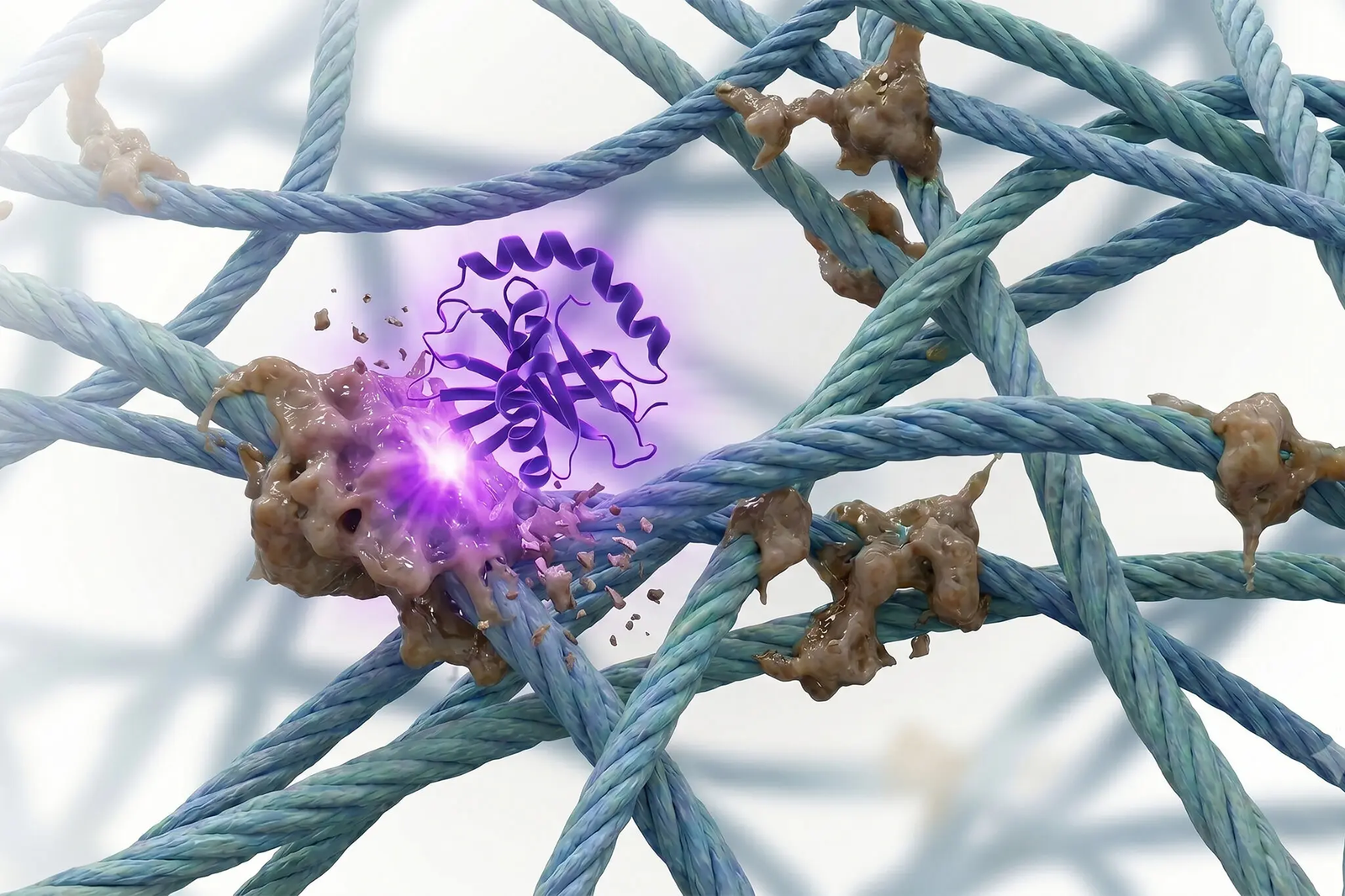
Aging has always been viewed as a natural process that cannot be reversed. However, new research into a specially designed enzyme called CMLase is challenging that idea by showing that some types of age-related molecular damage may be repairable.
Scientists have developed CMLase to target and remove a harmful compound called carboxymethyl lysine (CML), which builds up in human tissues as people age. This discovery could lead to future treatments designed to improve tissue health and address some effects of aging.
While CMLase is not an anti-aging treatment available today, the research represents an important step toward a new approach in longevity science: repairing damage instead of only slowing it down.
What Is CMLase and Why Is It Important?
CMLase is an engineered enzyme created by scientists to repair a specific type of molecular damage linked to aging.
The enzyme focuses on CML (Nε-carboxymethyl-lysine), a compound that forms when sugars react with proteins and fats inside the body. Over time, these damaged molecules accumulate and contribute to a group of substances known as advanced glycation end products (AGEs).
AGEs are associated with several aging-related problems, including:
- Loss of tissue flexibility
- Increased inflammation
- Reduced protein function
- Changes in blood vessels and organs
For many years, scientists believed that this type of damage was extremely difficult to reverse. CMLase research suggests that some age-related changes may be repaired rather than permanently accepted.
How Does the CMLase Enzyme Work?
Unlike many treatments that focus on preventing damage, CMLase works by removing existing molecular damage.
The enzyme is designed to recognize CML molecules attached to proteins and convert them back toward their original structure.
Researchers used advanced biotechnology methods, including enzyme engineering and evolutionary screening, to create a version of CMLase that could effectively target CML.
The goal is simple:
Find damaged proteins → Remove CML damage → Restore healthier protein function
This approach represents a new direction in aging research.
Why CML Accumulation Happens During Aging
As the human body produces energy and processes food, chemical reactions naturally occur inside cells.
Over decades, repeated exposure to sugars and oxidative stress can create damaged molecules.
CML accumulation increases because:
- Aging slows natural repair processes
- Long-lived proteins remain in tissues for years
- Metabolic changes increase molecular damage
- Oxidative stress affects cellular structures
These changes can affect important tissues such as:
- Skin
- Blood vessels
- Eyes
- Connective tissues
CMLase Research Shows Promising Early Results
Early laboratory studies have produced encouraging results.
Scientists tested CMLase on different human tissue samples, including:
- Human skin samples
- Eye lens proteins
- Aging artery tissues
The enzyme successfully reduced CML-related damage in these samples, suggesting that targeted molecular repair may be possible.
However, these findings are still at the research stage. More studies are needed before scientists know whether CMLase can safely work inside the human body.
How CMLase Could Change Aging Research
Most current aging research focuses on prevention.
Scientists study ways to:
- Reduce inflammation
- Improve metabolism
- Protect cells from damage
- Support healthy lifestyles
CMLase introduces a different idea:
What if we repair aging damage after it happens?
This concept is becoming increasingly important in longevity research.
Instead of only slowing biological decline, future therapies may attempt to restore damaged tissues and improve their function.
Potential Medical Uses of CMLase
If future studies prove that CMLase is safe and effective, the technology could potentially support treatments for conditions connected to aging-related damage.
Possible areas of research include:
Heart and Blood Vessel Health
CML accumulation affects blood vessel structure and flexibility. Repairing this damage could potentially support cardiovascular health.
Skin Aging
CML contributes to changes in skin elasticity and structure. Enzyme-based repair could become an area of future anti-aging skin research.
Eye Health
Long-lasting proteins in the eye lens can accumulate AGE-related damage over time. CMLase may provide new research opportunities for age-related vision problems.
Metabolic Health
Because glycation is connected with blood sugar levels, CML repair could also be studied in metabolic diseases.
Challenges Before CMLase Becomes a Treatment
Although the discovery is exciting, several challenges remain.
Delivering the Enzyme Inside the Body
Scientists must find ways to safely deliver CMLase to the right tissues.
Long-Term Safety
Researchers need to understand whether removing CML creates any unexpected effects.
Human Clinical Trials
Laboratory success does not guarantee medical success. Human studies will be required before any treatment becomes available.
Complex Nature of Aging
Aging is caused by many biological processes, including:
- DNA damage
- Cellular decline
- Inflammation
- Mitochondrial problems
- Protein damage
Repairing one type of damage will not completely stop aging.
CMLase Is Not an Anti-Aging Cure Yet
Despite the excitement around longevity research, CMLase should not be considered a “fountain of youth.”
The enzyme has shown potential in laboratory experiments, but it is still far from becoming a human therapy.
The research does not mean people can reverse aging today. Instead, it provides evidence that some forms of age-related damage may be scientifically repairable.
The Future of Enzyme-Based Aging Treatments
CMLase represents a broader movement in biotechnology toward biological repair.
Future aging treatments may combine:
- Engineered enzymes
- Gene therapies
- Artificial intelligence-designed proteins
- Regenerative medicine
- Personalized healthcare
Scientists are increasingly exploring whether the human body can be repaired at a molecular level.
Conclusion
The CMLase enzyme breakthrough offers a new perspective on aging research. Instead of only trying to slow age-related decline, scientists are exploring ways to repair the damage that accumulates over time.
While CMLase is still in the experimental phase, its ability to reduce aging-related protein damage in human tissues could open new possibilities for future medicine.
The discovery does not mean aging can be reversed today, but it represents an important step toward a future where biological repair may become part of healthy aging strategies.