The U.S.-led international coalition formally ended its military mission in Iraq on September 30, 2026, completing the withdrawal of U.S. forces and equipment from Erbil Air Base. The move brings an end to the Iraq-based phase of Operation Inherent Resolve, the campaign launched in 2014 to fight the Islamic State, also known as ISIS or Daesh.
The withdrawal marks a major change in the U.S.-Iraq security relationship. Instead of a multinational military mission, Washington and Baghdad are moving toward a bilateral defense and security partnership, while the coalition’s counter-ISIS mission continues from Jordan and in Syria.
U.S. Forces Complete Withdrawal From Iraq
U.S. Central Command said it completed the orderly departure of American forces and equipment from Erbil Air Base on September 30.
The departure fulfilled a previously agreed timetable between Washington and Baghdad. The final withdrawal followed earlier reductions in the U.S. military presence across Iraq, with Erbil becoming the final major location from which U.S. forces departed.
The Pentagon described the conclusion as the end of a 12-year campaign that defeated ISIS as an organized military threat in Iraq.
Operation Inherent Resolve Began in 2014
The coalition mission began in 2014 after ISIS captured large areas of Iraq and Syria.
The organization seized major cities, including Mosul, and Iraqi security forces struggled to stop its rapid territorial expansion. The United States and its international partners responded with air operations, training, intelligence support and assistance to Iraqi and Kurdish forces.
Over the following years, Iraqi forces, Kurdish Peshmerga and coalition partners pushed ISIS out of its territorial strongholds.
The military mission continued even after ISIS lost its territorial control, focusing on supporting Iraqi security forces and counterterrorism operations.
Iraq Takes Greater Security Responsibility
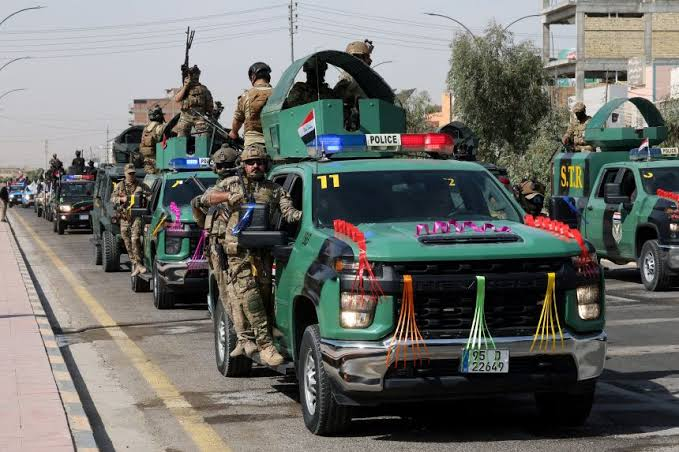
With the coalition’s military mission ending, Iraqi security forces and the Kurdish Peshmerga are expected to take primary responsibility for security inside the country.
The British government said Iraqi forces had secured the territorial defeat of Daesh in Iraq and were positioned to assume greater responsibility for the country’s security.
The change does not mean that all security cooperation between Iraq and Western countries has ended.
Instead, the relationship is expected to shift toward bilateral cooperation, including areas such as intelligence, training and defense assistance.
The Mission Continues in Syria
An important distinction is that the end of the Iraq mission does not mean Operation Inherent Resolve has completely ended.
The coalition task force remains headquartered in Jordan, while U.S. forces continue supporting counter-ISIS operations in Syria alongside coalition partners and the Syrian government.
This means the United States continues to maintain a military role in the broader campaign against ISIS, even though the Iraq-based coalition mission has concluded.
Iraq Marks a New Phase
Iraqi officials presented the withdrawal as an important moment for national sovereignty.
Prime Minister Ali al-Zaidi marked the occasion with a ceremony in Baghdad, with Iraqi officials describing the end of the coalition mission as a transition toward greater Iraqi control over national security.
The withdrawal also comes after more than two decades of changing U.S. military involvement in Iraq.
American forces first entered Iraq during the 2003 invasion. Most U.S. troops left in 2011, but the rise of ISIS led to a renewed American military presence beginning in 2014.
Security Concerns Remain
Despite the withdrawal, questions remain about Iraq’s future security environment.
One concern is whether ISIS could rebuild its capabilities if pressure on its networks decreases. Another involves armed groups operating outside the direct control of the Iraqi government.
The withdrawal could also alter the balance among Iraq’s political and military factions, particularly those with close relationships with Iran.
Recent reporting has highlighted concerns in the Kurdistan Region, where the end of the coalition’s military presence could create additional pressure on local air-defense capabilities.
Iran-Backed Groups Welcome the Withdrawal
Some Iran-aligned armed groups in Iraq have publicly celebrated the departure of U.S. forces.
Their reactions reflect the long-running dispute over the American military presence in Iraq and the broader regional competition involving Washington and Tehran.
The withdrawal therefore has significance beyond the fight against ISIS. It also changes the military environment in a country that has frequently been caught between competing regional interests.
What Changes After September 30?
The end of the coalition mission means:
- U.S. forces have completed their Iraq withdrawal.
- Operation Inherent Resolve’s Iraq-based military mission has ended.
- Iraqi forces take greater responsibility for domestic security.
- U.S.-Iraq defense cooperation continues on a bilateral basis.
- Coalition counter-ISIS operations continue in Syria.
- The coalition headquarters remains in Jordan.
- Questions remain over ISIS activity and armed groups operating outside state control.
A Major Turning Point for U.S.-Iraq Relations
The September 30 withdrawal represents another major transition in the relationship between Washington and Baghdad.
The United States is moving away from a large multinational military operation in Iraq and toward a more conventional security partnership. At the same time, Iraq faces the challenge of maintaining security without the same level of coalition military support.
The effectiveness of Iraqi security forces, intelligence cooperation and regional diplomacy will be important factors in determining how the new arrangement develops.
Conclusion
The U.S.-led coalition ended its military mission in Iraq on September 30, 2026, after more than a decade of operations against ISIS. The final departure from Erbil Air Base formally concluded the Iraq-based phase of Operation Inherent Resolve.
The change represents a shift rather than the complete end of U.S.-Iraq security cooperation. Washington and Baghdad are expected to continue working together through a bilateral defense relationship, while the coalition continues counter-ISIS activities in Syria.
For Iraq, the next phase will involve taking greater responsibility for national security while managing the remaining ISIS threat and the influence of armed groups. For the United States, the withdrawal marks another significant reduction in its direct military presence in Iraq after more than two decades of involvement.