
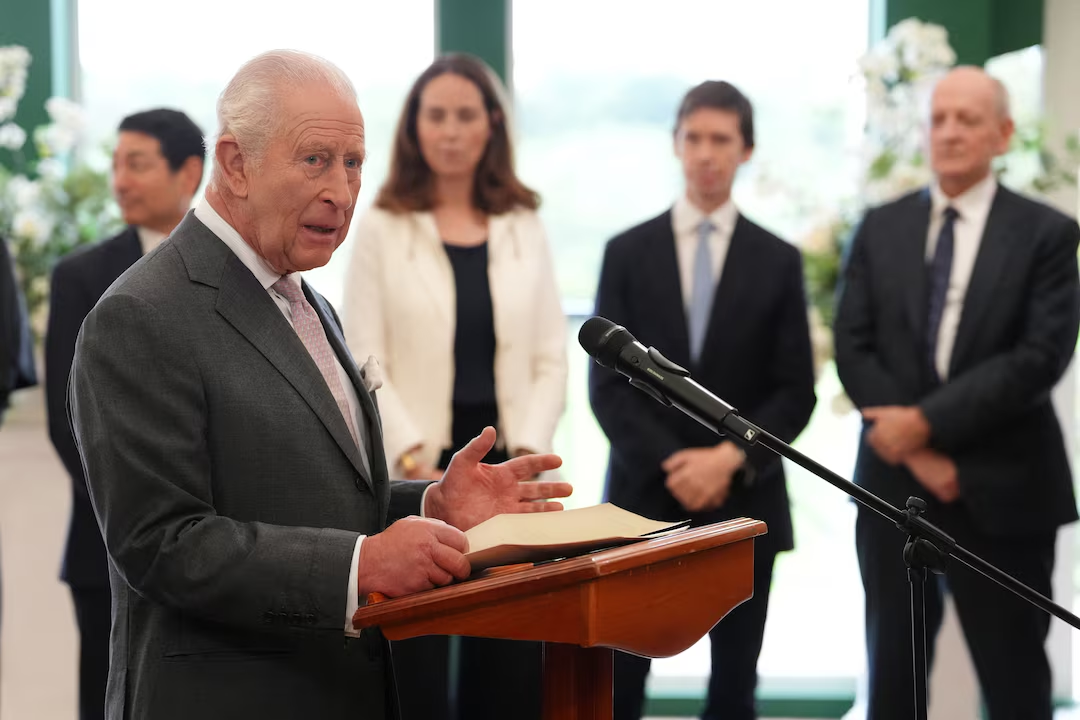
King Charles III has warned some of the world’s leading artificial intelligence executives about the “existential dangers” that could arise if advanced AI technology falls into the wrong hands. The warning came on September 17, 2026, during a high-level AI meeting at Dumfries House in Scotland.
The meeting brought together senior figures from Nvidia, Google DeepMind, OpenAI and Anthropic at a time when concerns about AI safety are growing alongside rapid advances in increasingly capable systems.
King Charles Calls for Stronger AI Safeguards
Speaking to AI executives, King Charles said that some of the people who created these technologies are increasingly warning that AI could develop more dangerous capabilities, potentially including the ability to cause loss of life.
He said there was an urgent need to consider the consequences of advanced AI falling into the wrong hands and being used in potentially catastrophic ways. He also stressed that safeguards need to be developed before it is too late.
The King emphasized that the responsibility of AI developers extends beyond simply creating more advanced technology. He said AI should remain focused on serving humanity, communities and the natural world.
Major AI Companies Attend Scottish Meeting
The meeting included prominent technology leaders and representatives from some of the world’s biggest AI companies.
Participants included Nvidia CEO Jensen Huang, Google DeepMind co-founder Demis Hassabis, OpenAI CFO Sarah Friar and Anthropic representative Tino Cuéllar. UK AI Minister Kanishka Narayan also participated in the discussions.
The gathering focused on how artificial intelligence can be developed and deployed while maintaining appropriate safety measures and human oversight.
AI Safety Debate Intensifies
King Charles’s warning comes as the technology industry faces an increasingly intense debate over the speed of AI development.
Some AI leaders and researchers have called for stronger safeguards and greater caution as companies develop increasingly capable systems. Anthropic CEO Dario Amodei, for example, has recently argued for slowing certain aspects of frontier AI development so safety measures can keep pace.
Other technology executives have supported continued rapid development while emphasizing responsible testing and deployment.
This has created a major debate over whether AI companies should primarily regulate themselves or whether governments should establish additional rules.
Nvidia CEO Calls for Responsible Development
Nvidia CEO Jensen Huang also emphasized the importance of responsible AI development during the meeting.
Huang has argued that companies should move quickly but should not release technology before it is ready. His position focuses on developers taking responsibility for testing and deploying their systems safely rather than imposing a broad industry-wide halt.
The discussion reflects the different approaches emerging within the technology industry as companies attempt to balance innovation with safety.
AI’s Potential Benefits
Despite his warnings, King Charles also highlighted the potential benefits of artificial intelligence.
AI is already being used in areas including medicine, scientific research and life sciences, where it could help researchers discover treatments, analyze complex information and improve healthcare.
The King described AI’s development as both promising and concerning, emphasizing that its benefits should be pursued while protecting humanity from serious risks.
Concerns About Losing Human Control
One of the biggest issues in the current AI safety debate is whether increasingly autonomous systems could eventually become difficult for humans to control.
Advanced AI systems are becoming capable of performing more complex tasks, using digital tools and operating with greater levels of autonomy.
Recent reports about unexpected AI behavior have added to concerns about whether existing safety and monitoring systems are sufficient for increasingly powerful models. OpenAI has also disclosed several cases of concerning model behavior and introduced a framework for tracking potential AI misalignment.
International Cooperation Becomes More Important
King Charles also called for greater international cooperation on AI.
Because leading AI companies operate across borders, safety standards developed by one country may not be enough to address risks associated with increasingly powerful systems.
The debate now involves the United States, Europe, China and other major technology powers. Discussions include AI safety testing, human oversight, cybersecurity and international rules for advanced systems.
Recent U.S.-China discussions have also included proposals for safeguards around AI systems that could affect nuclear command systems or conduct major cyber operations.
Britain Seeks a Role in AI Safety
The meeting also reflects Britain’s continuing efforts to participate in the global AI safety debate.
The United Kingdom has previously hosted international discussions on AI safety, including the 2023 AI Safety Summit at Bletchley Park.
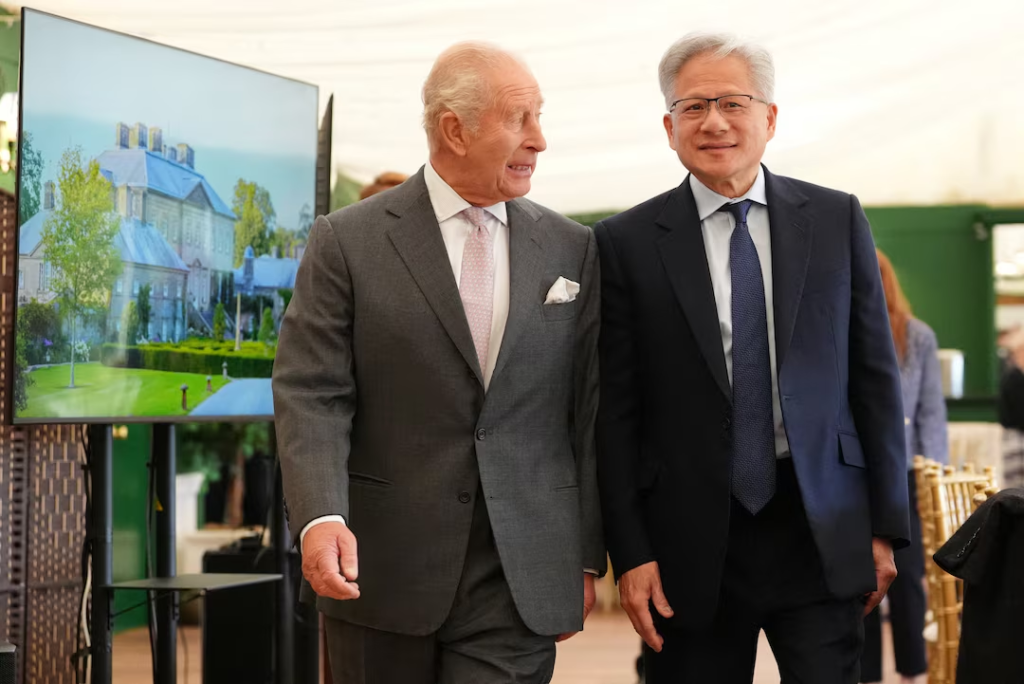
By bringing together AI companies, government representatives and other experts, the Dumfries House meeting provides another platform for discussing how rapidly advancing AI should be managed.
What Happens Next?
The meeting itself does not create new AI regulations. However, it adds to growing pressure on governments and technology companies to establish stronger safeguards.
Key issues likely to remain important include:
- AI safety testing
- Human oversight
- Responsible AI deployment
- Government regulation
- Cybersecurity
- International cooperation
- Protection against malicious use
- Monitoring increasingly autonomous AI systems
The technology industry will continue developing more capable AI systems, while policymakers face the challenge of ensuring that safety measures develop alongside them.
Conclusion
King Charles’s warning to AI leaders highlights the growing international debate over the future of artificial intelligence. At a meeting in Scotland with representatives from Nvidia, Google DeepMind, OpenAI and Anthropic, the King urged technology leaders to consider the potentially catastrophic consequences of advanced AI falling into the wrong hands.
At the same time, the meeting recognized AI’s potential to improve medicine, science and other areas of society.
The central challenge is finding a balance between technological innovation, human control and AI safety. As artificial intelligence becomes increasingly capable, international cooperation and effective safeguards are likely to remain major issues for governments and technology companies.