The annual White House Correspondents’ Dinner has long been one of Washington’s most unusual traditions—part journalism celebration, part political theater, and part comedy showcase. In recent years, however, the event has increasingly become a reflection of America’s polarized political climate, where humor, media criticism, and presidential politics all intersect on the same stage.
At its core, the dinner brings together journalists, politicians, and celebrities to honor press freedom while also allowing late-night comedians to roast those in power. Traditionally, this balance between satire and statecraft has made the event both entertaining and controversial. Presidents often attend, delivering self-deprecating remarks before handing the spotlight to comedians who deliver sharper critiques.
This year’s atmosphere was particularly charged, as late-night hosts used their platforms to respond not only to political tensions but also to a recent security incident at the event. The show, which was meant to be a lighthearted cultural moment, became part of a broader national conversation about safety, free speech, and the role of satire in a tense political environment.
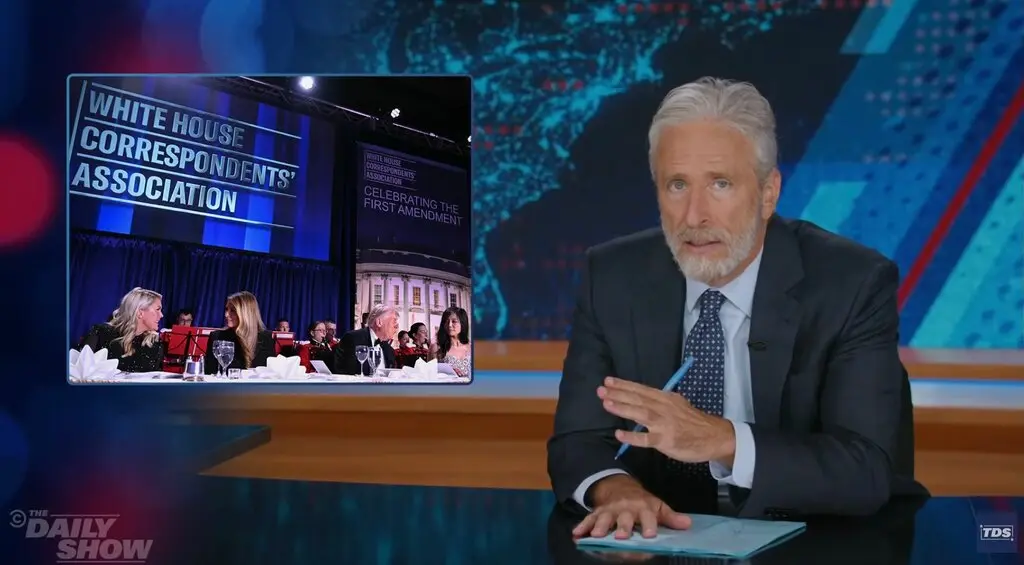
Comedians like Jimmy Kimmel, Seth Meyers, and Jon Stewart leaned into their familiar styles of political humor, but their monologues carried a more serious undertone than usual. Rather than focusing only on traditional political jokes, they addressed the broader anxiety surrounding public events and the unpredictable nature of modern political discourse.
Kimmel, in particular, defended earlier jokes that had sparked backlash, arguing that satire often gets misunderstood when taken out of context. Meyers emphasized the importance of continuing to speak openly in a democracy, while Stewart used irony to highlight what he described as the absurdities of Washington’s political culture.
The dinner also reignited debate about the relationship between the media and political power. Supporters of the event argue that humor plays a vital role in holding leaders accountable, allowing journalists and entertainers to critique authority in a way that is accessible to the public. Critics, however, believe the event has become too entangled with celebrity culture and political spectacle.
Beyond comedy, the White House Correspondents’ Dinner continues to symbolize the uneasy relationship between the press and the presidency. While it celebrates journalism, it also places journalists in the same room as the officials they cover, creating a unique mix of camaraderie and confrontation.
In recent years, shifting media consumption habits and rising political tensions have changed how the public views such events. What was once seen as a lighthearted annual gathering is now often scrutinized as a reflection of deeper divisions within American society.
Despite the controversies, the dinner remains a significant moment on the political calendar. It highlights not only the importance of a free press but also the evolving role of satire in shaping public understanding of politics. As late-night hosts continue to blur the line between entertainment and commentary, the event is likely to remain both influential and debated for years to come.