The Organization for Economic Co-operation and Development (OECD) has warned that the ongoing Iran conflict is becoming a major shock to the global economy, slowing growth forecasts and pushing inflation higher across major regions as energy markets, trade routes, and investor confidence remain under pressure.
The assessment comes as escalating tensions around the Strait of Hormuz and broader Middle East instability continue to disrupt oil flows and increase volatility in global financial markets.
Iran Conflict Becomes a Global Economic Shock
According to OECD-linked assessments, the Iran war has shifted from a regional geopolitical crisis into a systemic global economic risk.
Key concerns highlighted by economists include:
- Slower global GDP growth than previously expected
- Persistent energy price volatility driven by oil supply risks
- Rising inflation in both developed and emerging economies
- Increased uncertainty for trade, shipping, and investment flows
The OECD warns that prolonged disruption in the Middle East could significantly weaken the global recovery trajectory.
Growth Forecasts Cut as Risks Intensify
The OECD’s updated outlook suggests global growth is now expected to decline compared to earlier projections, largely due to energy shocks linked to the Iran conflict.
Under current conditions:
- Global growth slows from stronger pre-war expectations
- Inflation remains elevated due to oil and shipping disruptions
- Investment activity becomes more cautious amid uncertainty
- Central banks face harder trade-offs between growth and inflation
In more severe scenarios where the conflict continues into 2027, global growth could drop sharply and push multiple economies toward recession conditions.
Oil Markets and the Strait of Hormuz at the Center
A major driver of economic instability is the Strait of Hormuz, one of the world’s most important oil shipping routes.
Recent disruptions and security risks in the region have:
- Increased oil price volatility
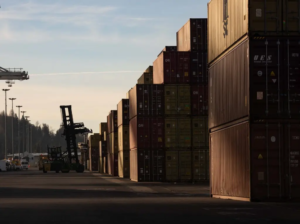
- Raised shipping insurance and transport costs
- Reduced confidence in stable energy supply chains
- Triggered strategic stockpiling and supply adjustments
Because nearly one-fifth of global oil passes through the strait, even limited disruption has outsized effects on inflation and global trade.
Inflation Pressure Spreads Across Global Economies
Rising energy costs are feeding directly into broader inflation pressures worldwide.
Economists note that higher oil prices are affecting:
- Transportation and logistics costs
- Food production and fertilizer prices
- Manufacturing supply chains
- Consumer energy bills
While core inflation in some advanced economies remains relatively stable, headline inflation is being pushed higher by persistent energy shocks.
AI Boom Faces Hidden Economic Risk
A key secondary concern highlighted in economic analysis is the impact on emerging technology sectors, particularly artificial intelligence.
Rising energy and input costs could:
- Increase the cost of running data centers
- Disrupt semiconductor supply chains
- Slow investment in AI infrastructure
- Create volatility in tech-heavy stock markets
This introduces a new layer of risk where geopolitical instability may indirectly slow high-growth digital sectors.
Emerging Economies Face the Highest Risk
The OECD warns that developing countries are likely to be most vulnerable to prolonged disruption.
These risks include:
- Higher fuel import costs
- Currency instability
- Food inflation driven by transport costs
- Increased debt pressure due to economic slowdown
Countries heavily dependent on imported energy face the sharpest economic strain.
Central Banks Face a Policy Dilemma
The Iran-related energy shock is also complicating monetary policy decisions.
Central banks now face a difficult balance:
- Raising interest rates risks slowing growth further
- Cutting rates could worsen inflation pressures
- Energy-driven inflation is harder to control with policy tools
This creates prolonged uncertainty for global financial markets.
Global Economy Enters “Fragile Equilibrium”
Despite the shock, the global economy has not yet entered full crisis mode. Instead, economists describe the situation as a fragile equilibrium — where strong sectors like technology investment and services are partially offsetting geopolitical damage.
However, warnings are growing that:
- Continued escalation could break this balance
- Energy shocks could deepen into recession-level impacts
- Financial markets may face sudden repricing risks
Conclusion
The OECD’s assessment makes clear that the Iran war is no longer just a regional conflict — it is a structural risk to global economic stability. With energy markets under strain, inflation persistent, and growth forecasts weakening, the world economy is entering a more uncertain phase.
The key question now is not whether the conflict affects global growth, but how long the global system can absorb the shock before more severe economic consequences emerge.