
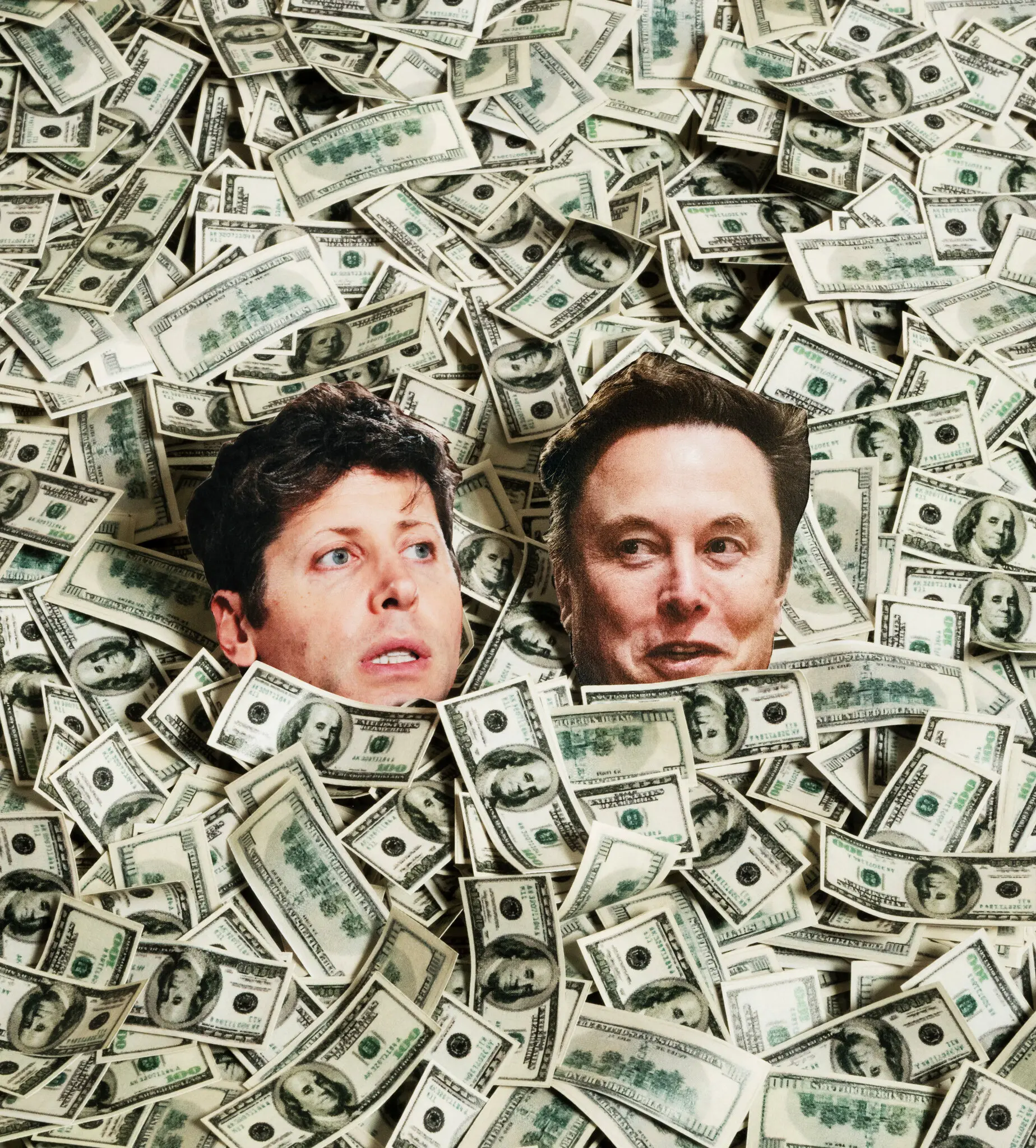
A high-stakes courtroom battle between Elon Musk and OpenAI CEO Sam Altman has begun in California, turning a once collaborative relationship into one of the most closely watched legal and technological disputes in the world. The trial centers on claims that OpenAI abandoned its founding mission and raises broader questions about who controls the future of artificial intelligence.
Elon Musk, who co-founded OpenAI in 2015, argues that the organization was originally created as a nonprofit dedicated to developing artificial intelligence safely for humanity. In his testimony, he accused Altman and other executives of transforming the company into a profit-driven enterprise, prioritizing commercial partnerships and valuation growth over its original mission. He has described the shift as a betrayal of the founding principles he helped establish.
According to Musk’s legal team, OpenAI’s leadership gradually moved the organization toward a for-profit structure, especially after forming deep ties with major tech investors such as Microsoft. Musk claims this transition undermined the agreement under which he contributed early funding, recruited key researchers, and helped shape the company’s direction. The lawsuit seeks damages and structural changes, including restoring nonprofit control and removing current leadership.
OpenAI, led by Sam Altman, strongly rejects these accusations. The company argues that Musk’s claims are driven by competitive interests, particularly as he leads his own AI company, xAI. According to OpenAI’s defense, the shift toward a for-profit model was necessary to secure the massive computing power and funding required to compete with other AI giants like Google DeepMind.
At the center of the dispute is a deeper philosophical disagreement: whether advanced AI development should remain under nonprofit control or operate within a commercial ecosystem driven by investment and rapid scaling. Musk warns that profit motives could compromise safety and ethical oversight, while OpenAI argues that large-scale funding is essential to remain competitive and innovative.
The trial has also exposed personal tensions between the two tech leaders. Once collaborators, Musk and Altman now exchange sharp public criticism, with Musk accusing OpenAI of abandoning its mission and Altman defending the company’s evolution as necessary and responsible.
The case is expected to last several weeks and could have significant implications for the AI industry. Beyond financial damages, it may influence how future AI organizations are structured and governed, especially as governments and companies race to shape artificial intelligence standards.
As testimony unfolds, the courtroom has become a symbolic stage for a much larger debate: whether artificial intelligence should be guided primarily by public mission ideals or by market-driven innovation.