
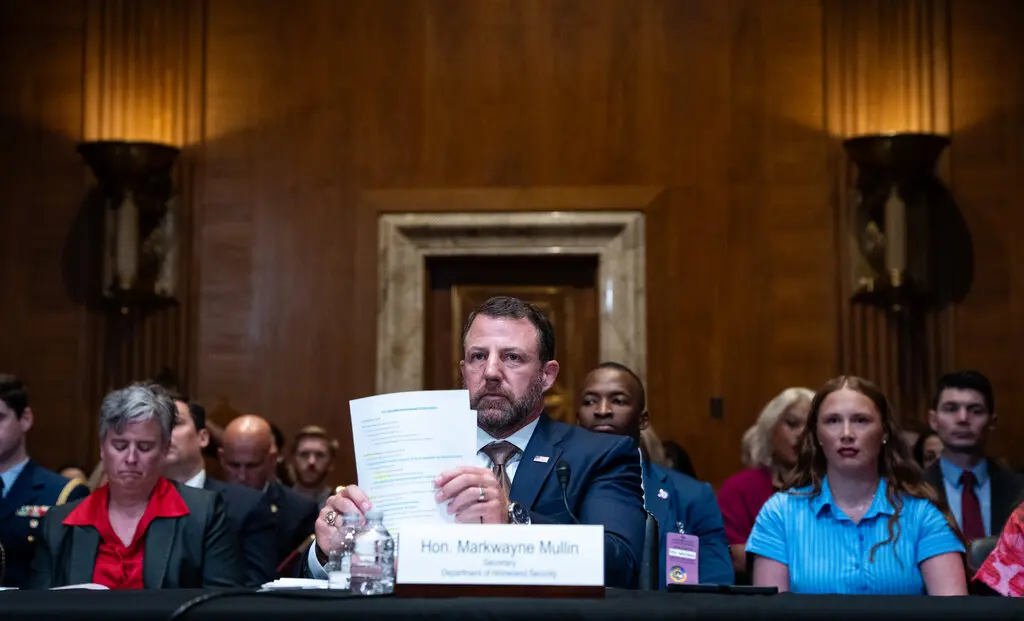
The Trump administration is accelerating efforts to review and potentially revoke the citizenship of some naturalised Americans, as part of a broader immigration and national security policy that has triggered growing legal scrutiny and political controversy.
The latest developments, reported on June 8, 2026, indicate that the Justice Department is expanding its use of denaturalization proceedings — a rare legal process that allows the government to strip citizenship from individuals who obtained it through fraud or misrepresentation.
Expanded Denaturalization Campaign Under Review
Federal officials are reportedly increasing the scale and pace of denaturalization cases, following internal guidance encouraging prosecutors to prioritise citizenship review investigations across multiple states.
Key elements of the policy include:
- Identification of individuals suspected of fraud during naturalisation
- Expansion of civil denaturalization proceedings in federal courts
- Increased coordination between immigration and Justice Department units
- A higher volume of referrals from immigration enforcement agencies
The administration argues the effort is aimed at protecting the integrity of the citizenship system, while critics warn it could broaden government power over naturalised citizens.
Legal Foundation and High Burden of Proof
Denaturalization is a legal process that requires the government to prove in federal court that citizenship was obtained illegally, typically through:
- False statements during immigration applications
- Concealment of criminal history
- Fraudulent documentation or identity claims
Legal experts note that the burden of proof is extremely high, and courts have historically limited its use to serious and clearly documented cases.
Rising Concerns Over Expansion of Scope
Civil rights groups and immigration lawyers have raised concerns that the current expansion could stretch the traditional boundaries of denaturalization law.
Critics argue that:
- Broader targeting criteria may risk politicisation
- Increased caseloads could overwhelm federal courts
- Some cases may rely on disputed or historical information
- Due process protections could face pressure under accelerated timelines
Supporters, however, maintain that enforcement is necessary to address long-standing fraud within immigration systems.
Political Debate Over Citizenship and National Security
The policy has become a flashpoint in wider debates over immigration enforcement, national security, and civil liberties.
Supporters of the administration’s approach argue that:
- Citizenship must remain conditional on lawful entry and honesty
- Fraudulent naturalisation undermines public trust
- Strong enforcement deters misuse of immigration systems
Opponents counter that:
- Expanded denaturalization could chill immigrant communities
- It risks being used as a political or ideological tool
- Citizenship security could be weakened for naturalised Americans
Part of Broader Immigration Enforcement Strategy
The denaturalization push is part of a wider enforcement framework that also includes:
- Increased deportation activity
- Expanded third-country removal agreements
- Greater coordination between federal agencies
- Heightened focus on immigration fraud investigations
Together, these policies reflect a more aggressive approach to immigration enforcement under the current administration.
Legal and Constitutional Questions
Constitutional scholars are closely watching how courts respond to the expanded use of denaturalization powers, particularly in relation to:
- The Fourteenth Amendment’s citizenship protections
- Due process guarantees in civil proceedings
- Limits on executive authority in immigration enforcement
- Potential risks of statelessness in contested cases
Several legal challenges are expected as new cases move through federal courts.
Conclusion
The Trump administration’s renewed focus on denaturalization represents one of the most sensitive areas of immigration policy in 2026. While framed as an effort to enforce legal standards and protect citizenship integrity, the expansion has sparked significant debate over due process, civil rights, and the long-term implications for naturalised Americans.
As more cases are filed and reviewed, the courts are likely to play a decisive role in defining how far the government can go in revisiting granted citizenship.