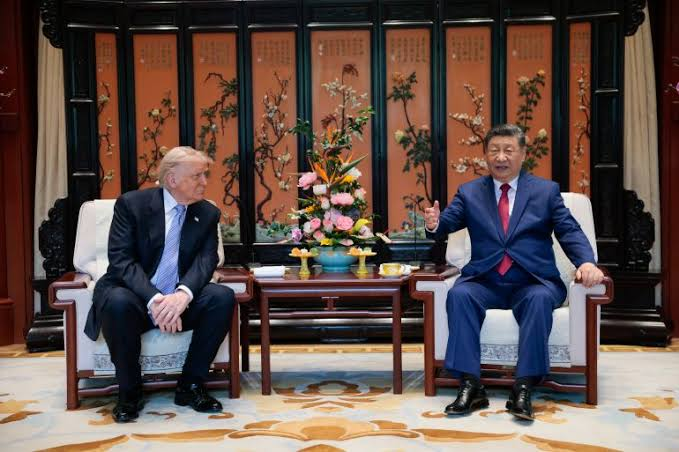
U.S. President Donald Trump and Chinese President Xi Jinping met at the White House on September 24, 2026, during Xi’s three-day state visit to Washington. The meeting brought trade, artificial intelligence, Taiwan and the war involving Iran into focus as the two countries continued efforts to manage a complicated relationship.
Xi’s visit was the first Chinese state visit to Washington in more than a decade and included a formal arrival ceremony, White House talks and a state dinner attended by prominent business and technology leaders.
Trump Gives Xi a Formal White House Welcome
Trump and First Lady Melania Trump hosted Xi and Chinese First Lady Peng Liyuan for an official state visit.
The ceremony included military honors and other formal elements normally associated with major state visits. Trump had already greeted Xi at Joint Base Andrews on September 23, before the White House ceremony the following day.
The highly visible reception reflected the importance Washington placed on the visit, even as major disagreements between the United States and China remained unresolved.
Trade Talks Remain a Central Issue
Trade was one of the main subjects surrounding the summit.
The United States and China agreed to extend their existing trade truce, giving both sides additional time to negotiate economic issues. Reuters reported that the extension was relatively short and was intended to prevent another immediate escalation in the trade dispute.
The two countries have imposed tariffs and other restrictions on each other’s goods and technologies in recent years. Businesses around the world have been watching the negotiations because U.S.-China trade policies can affect international supply chains and manufacturing costs.
Artificial Intelligence Takes the Spotlight
Artificial intelligence was another major topic.
Trump said AI would be a significant subject during his meeting with Xi, while indicating that he wanted the existing U.S. approach to AI to remain largely unchanged.
The issue has become particularly important because the United States and China are competing to develop increasingly advanced AI systems.
Recent warnings from AI researchers and executives have also increased international attention on AI safety, cybersecurity and autonomous systems.
Taiwan Remains a Major Disagreement
Taiwan continued to be one of the most sensitive issues in the U.S.-China relationship.
Beijing considers Taiwan part of China, while the United States maintains close unofficial relations with Taiwan and provides it with military equipment.
Chinese officials have sought stronger U.S. commitments on the Taiwan issue, while Washington has continued to maintain its own policy toward the island.
The summit therefore provided an opportunity for both governments to communicate their positions, but it did not eliminate the underlying disagreement.
Iran War Adds Another Complication
The ongoing conflict involving Iran was also discussed during the summit.
The United States and China have different relationships with Tehran, and Washington has sought to limit China’s economic support for Iran.
Reuters reported that Trump raised the issue of Iran with Xi during discussions, adding another geopolitical challenge to an already complicated U.S.-China relationship.
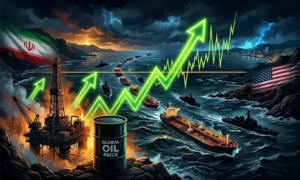
The issue is particularly significant because the Iran conflict has affected energy markets, shipping routes and international diplomacy.
Technology and Rare-Earth Supply Chains
Technology competition remains closely connected to the broader economic relationship.
China is a major supplier and processor of rare-earth materials used in electronics, electric vehicles, renewable-energy equipment and defense systems.
The United States, meanwhile, has introduced restrictions affecting advanced semiconductor and technology exports to China.
These competing policies have encouraged both countries to strengthen domestic supply chains while negotiating areas where economic cooperation remains possible.
State Dinner Brings Business Leaders Together
Trump hosted Xi at a formal state dinner at the White House.
The guest list included major American technology executives and other prominent business figures. Reuters reported that executives from companies including Amazon, Alphabet, OpenAI, Apple, Tesla and Nvidia were expected to attend.
The event provided a highly public setting for the two countries to emphasize continued economic engagement despite their strategic competition.
No Major Breakthrough on Key Disputes
Despite the elaborate ceremonies and diplomatic meetings, Reuters reported that there was no immediate breakthrough on some of the most difficult issues, including AI, Taiwan and the Iran war.
The trade truce extension was one of the more concrete outcomes, but many broader disagreements remain.
That means the summit should be viewed as part of an ongoing negotiation rather than a complete reset of U.S.-China relations.
What Happens Next?
The two governments are expected to continue discussions on several issues:
- U.S.-China trade
- Tariffs and market access
- Artificial intelligence
- Semiconductor restrictions
- Rare-earth minerals
- Taiwan
- Iran
- Military communication
- Technology competition
The future of these discussions will influence businesses, investors and governments well beyond Washington and Beijing.
Conclusion
The September 24, 2026 meeting between Donald Trump and Xi Jinping in Washington placed U.S.-China relations at the center of international attention.
Trade, artificial intelligence, Taiwan and the Iran conflict were among the major issues surrounding the summit. The two countries extended their trade truce, but Reuters reported that major disagreements remained over several strategic issues.
Xi’s state visit demonstrated that Washington and Beijing continue to maintain high-level diplomatic communication despite their economic and geopolitical competition. The next phase of negotiations will determine whether the temporary trade arrangements develop into broader agreements or whether tensions return in areas such as technology, Taiwan and global security.