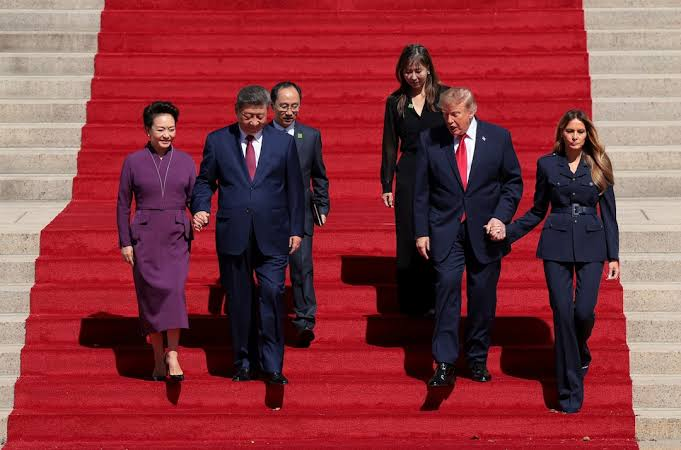
U.S. President Donald Trump and Chinese President Xi Jinping concluded their three-day Washington summit on September 25, 2026, ending a high-profile state visit that emphasized diplomacy and personal relations but produced relatively few major agreements. The leaders discussed trade, artificial intelligence, Taiwan, Iran and broader U.S.-China relations, while agreeing to continue talks later this year.
The most concrete economic development was an extension of the existing U.S.-China trade truce, while several of the most difficult strategic issues remained unresolved.
Trump and Xi End Visit at National Archives
On the final day of the visit, Trump and Xi toured the U.S. National Archives, where they viewed the Declaration of Independence, Constitution and Bill of Rights.
The visit followed a formal White House state dinner on September 24. Trump and Xi also held a private tea meeting before Xi departed Washington.
The ceremonial events highlighted the leaders’ stated interest in maintaining a stable relationship despite continuing disagreements between their governments.
Trade Truce Extended
The clearest economic outcome was an extension of the existing U.S.-China trade truce.
The arrangement gives Washington and Beijing additional time to negotiate broader economic issues rather than immediately returning to higher trade barriers. Reuters reported that the extension lasts for two additional months.
The two countries also moved toward reciprocal tariff reductions covering approximately $30 billion in nonsensitive goods from each country. The lists include products such as agricultural goods, personal-care products and household items, while strategic sectors including semiconductors and electric vehicles were excluded.
AI Talks Produce No Major Agreement
Artificial intelligence was another major subject during the summit.
Xi said the United States and China have a responsibility to develop AI while keeping its use under human control. The two countries agreed to continue dialogue on AI-related issues.
However, the summit did not produce a major agreement to slow the development of advanced AI systems or establish a joint framework governing the technology.
This was notable because both countries are competing for leadership in advanced AI, while governments and technology companies are increasingly discussing safety and security risks associated with increasingly autonomous systems.
Taiwan Remains a Major Dispute
Taiwan remained one of the most sensitive subjects in the relationship.
Xi urged Washington to oppose Taiwanese independence and objected to continued U.S. arms sales to Taiwan. Trump did not announce a major change in U.S. policy toward Taiwan during the summit.
The issue therefore remained unresolved after the leaders’ meetings.
Iran Also Featured in Discussions
The conflict involving Iran was another international issue discussed by Trump and Xi.
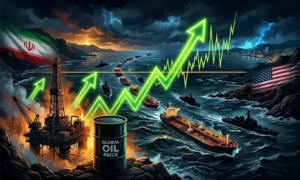
Trump continued to express concerns about China’s relationship with Iran, while Beijing did not publicly offer the assurances Washington was seeking. The issue is significant because the conflict has affected energy supplies, shipping and broader Middle Eastern security.
The discussion demonstrates how U.S.-China relations increasingly overlap with major international crises outside East Asia.
More Trump-Xi Meetings Planned
The summit did not end high-level communication between the two leaders.
Trump and Xi are expected to meet again at international gatherings later in 2026, including meetings connected with the Asia-Pacific Economic Cooperation summit in China and the G20 summit in Miami.
More face-to-face meetings could provide additional opportunities to negotiate trade, technology and security issues.
Global Economic Significance
The outcome of U.S.-China negotiations matters well beyond the two countries.
The United States and China are deeply connected through global supply chains involving:
- Electronics
- Agriculture
- Consumer goods
- Semiconductors
- Electric vehicles
- Critical minerals
- Artificial intelligence
- Industrial equipment
The trade-truce extension provides businesses with additional time to plan around tariffs and supply-chain restrictions.
The later release of reciprocal lists covering approximately $30 billion in nonsensitive products also created a more specific framework for tariff reductions.
What Remains Unresolved?
Despite the diplomatic tone, several major issues remain open:
- U.S.-China technology competition
- Advanced AI development
- Taiwan
- Semiconductor restrictions
- Critical minerals
- China’s relationship with Iran
- Trade imbalances
- Military communication
- Future tariff policy
The summit therefore represents continued engagement rather than a comprehensive settlement of U.S.-China disputes.
Conclusion
The Trump-Xi Washington summit ended on September 25, 2026, after three days of meetings, ceremonies and negotiations. The two leaders maintained a positive public tone and agreed to continue diplomatic engagement, but the summit produced limited progress on some of the most difficult issues between the United States and China.
The extension of the trade truce and the subsequent tariff-reduction framework for nonsensitive goods were among the clearest economic developments.
However, AI, Taiwan and China’s relationship with Iran remained areas of disagreement. Further Trump-Xi meetings later in 2026 will provide additional opportunities for negotiations.
For businesses and global markets, the immediate focus will likely remain on whether the extended trade truce develops into a broader and more durable economic arrangement.